ভিটামিন A সমৃদ্ধ স্মার্ট সুগার! — এখন বাজারে
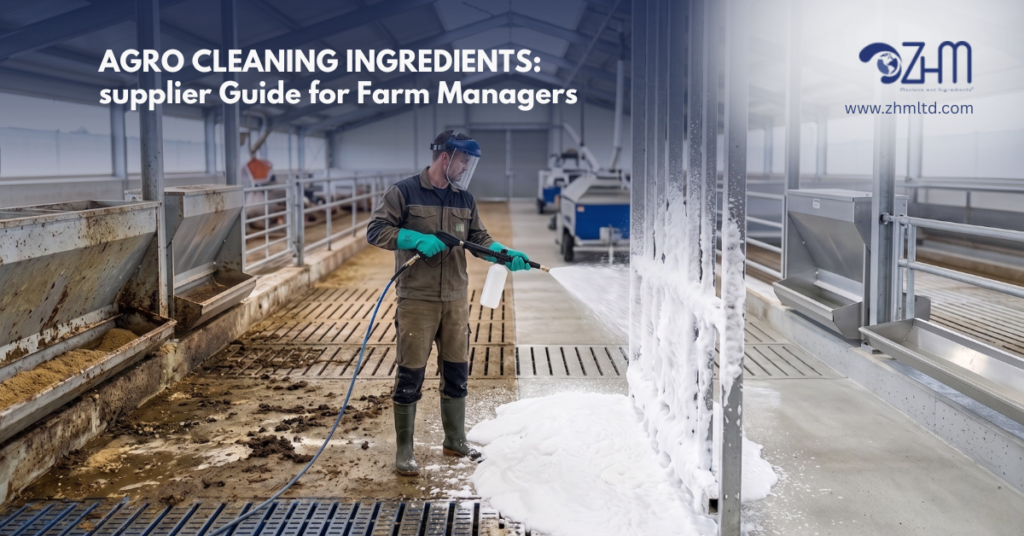
Proper cleaning of farm facilities is the critical first step in any successful biosecurity program. Before applying any disinfectants or biocides, all organic matter — including manure, litter, feed residues, blood, and stubborn biological biofilm — must be thoroughly and systematically removed. In Bangladesh's rapidly expanding poultry, dairy, and aquaculture industries, inadequate cleaning protocols remain one of the primary causes of recurring disease outbreaks, leading to devastating production losses and decreased profitability.
Farm managers often make the costly mistake of relying solely on disinfection, bypassing the essential detergent cleaning phase. However, you simply cannot disinfect dirt. Organic loads neutralize even the strongest disinfectants. To combat the unique challenges of high humidity, dense farming models, and challenging environmental factors in South Asia, robust agro cleaning Ingredients in Bangladesh are required.
Bangladesh's agricultural sector — particularly its poultry, dairy, pig, and aquaculture industries — operates in a tropical climate that presents year-round biosecurity challenges. High humidity, temperatures exceeding 35°C, and intensive animal housing conditions create ideal environments for pathogenic bacteria, viruses, and parasites to thrive and spread. Disease outbreaks in poultry farms, fish ponds, and dairy facilities cost Bangladesh's agricultural sector billions of taka in production losses, medication costs, and mortality every year.
The single most important — yet most frequently underestimated — step in preventing these disease outbreaks is thorough, effective cleaning before disinfection. Without proper cleaning, disinfectants cannot reach bacterial biofilms and viral particles protected by layers of organic matter. Contaminated surfaces, manure residues, feed spillage, and biofilm dramatically reduce the efficacy of even the most powerful disinfectants by up to 90%.
ZHM Group, Bangladesh's trusted industrial ingredient supplier with over 20 years of experience, supplies four specialised agro cleaning ingredients — PL56, EWA® FIX, POLYCLEAN, and EWA® FOAM ULTRA — sourced from globally certified manufacturers and used by farms across Bangladesh for effective biosecurity cleaning programs. All products are supplied with full Technical Data Sheets (TDS), Safety Data Sheets (SDS), and application guidance from our technical team.
Agro cleaning ingredients are specialised chemical formulations engineered specifically for the harsh, high-load environments of commercial agriculture and livestock farming. Unlike standard household or commercial janitorial cleaners, agro cleaning products must tackle extraordinary levels of complex organic matter—including concentrated animal feces, uric acid, heavy fats, blood, feather dust, and robust bacterial biofilms.
At their core, the most effective agro cleaning Ingredients in Bangladesh consist of a synergistic combination of high-grade alkaline builders, powerful surfactants (surface-active agents), and advanced chelating agents.
By combining these highly active ingredients, heavy-duty farm detergents strip away the protective organic layers that harbor disease, effectively resetting the microbiological environment and preparing the surface for successful terminal disinfection.
When discussing biosecurity on commercial farms, the conversation frequently gravitates towards advanced disinfectants, vaccines, and secure perimeters. Yet, the absolute foundation of keeping a farm pathogen-free is physical and chemical cleaning. Understanding why you need specialized farm cleaning Ingredients in Bangladesh requires a deep dive into the microscopic environment of a livestock facility.
Many Bangladesh farm managers focus their biosecurity investment on disinfectants — assuming that spraying a powerful disinfectant over a dirty surface will eliminate pathogens. This is a costly and dangerous misconception.
During a typical production cycle—whether it is a 35-day broiler flock or a long-term dairy operation—the housing facility accumulates massive amounts of organic waste. This waste consists of fecal matter, unconsumed feed, feather dust, animal fats, and respiratory secretions.
If this organic matrix is washed only with plain water, two things happen:
Pathogenic microorganisms — including Avian Influenza virus, Newcastle Disease Virus, Marek's Disease virus, Salmonella, E. coli, Clostridium, and Campylobacter — do not exist in isolation on farm surfaces. They are embedded within layers of organic matter: manure, feed residues, feather dander, dead skin cells, and biofilm (the protective slime layer secreted by bacteria colonies on surfaces).
This organic matter has two critical protective effects:
Research consistently shows that surfaces covered with even 1mm of organic matter can reduce disinfectant efficacy by 60–90% — meaning a farm manager applying disinfectant to a dirty surface is wasting money while maintaining dangerous pathogen levels.
Disinfectants (like glutaraldehyde, quaternary ammonium compounds, or peracetic acid) work by attacking the cell walls of pathogens. However, if organic dirt covers these pathogens, the disinfectant reacts chemically with the dirt instead of the bacteria. The active biocide is entirely consumed and neutralized by the manure, leaving the underlying bacteria completely unharmed.
By applying a high-quality alkaline detergent prior to disinfection, you alter the chemistry of the surface. Specialized detergents contain specific surfactants (surface-active agents) that reduce the surface tension of water, allowing it to penetrate microscopic cracks in concrete and wood. Furthermore, alkaline cleaners carry out saponification—a chemical reaction that turns animal fats into water-soluble soaps, making them incredibly easy to rinse away.
Effective farm biosecurity follows a strict sequence:
In Bangladesh, where the poultry sector contributes significantly to the national GDP, outbreaks of Avian Influenza (Bird Flu), Newcastle Disease, and Infectious Bursal Disease (Gumboro) can wipe out entire investments. Using dedicated poultry house cleaner BD solutions ensures that the viral load is mechanically and chemically stripped from the environment before new day-old chicks (DOCs) arrive. Investing in premium cleaning chemistry drastically reduces mortality rates, lowers veterinary medicine costs, and improves the Feed Conversion Ratio (FCR) by ensuring birds do not waste energy fighting off background infections.
ZHM Group supplies all four cleaning products required for steps 2–4, covering different farm facility types and soiling levels. Understanding which product to use in which situation is the key to cost-effective, effective farm cleaning.
PL56 is a concentrated alkaline detergent formulated for general-purpose cleaning of farm buildings, equipment, vehicles, and ancillary facilities. It is the everyday workhorse cleaning ingredient for farms that need a reliable, cost-effective, broad-spectrum cleaner for routine cleaning tasks.
When farm managers seek a versatile, highly effective, and reliable detergent for daily or turnaround cleaning, PL56 is the industry standard. As a multi-purpose alkaline cleaner, PL56 is formulated to cut through standard agricultural soils quickly and efficiently without causing damage to sensitive farm equipment.
PL56 is formulated with a blend of alkaline builders, anionic surfactants, and sequestering agents. Alkaline cleaners are particularly effective against the types of soiling common in farm environments:
The high pH (alkaline) environment breaks down the protein and fat structure of organic soiling, while the surfactants reduce surface tension — allowing cleaning solution to penetrate between the surface and the soiling layer.
PL56 is formulated with a precise blend of alkaline builders, non-ionic and anionic surfactants, and highly effective chelating agents (water softeners).
| Parameter | Specification |
| Product Type | Concentrated alkaline detergent |
| Application Method | Foaming, pressure washing, or immersion |
| Dilution Rate (General) | 1–3% (10–30ml per litre of water) |
| Dilution Rate (Heavy Soiling) | 3–5% (30–50ml per litre) |
| Application Temperature | Cold or warm water (warm improves efficacy) |
| Contact Time | 10–30 minutes (allow to soak before rinsing) |
| Compatible Surfaces | Concrete, metal, plastic, rubber |
One of the primary benefits of using PL56 farm cleaner Bangladesh is its economical dilution rate.
The application is straightforward. PL56 can be applied using standard knapsack sprayers, power washers, or automated dosing systems. The solution should be sprayed onto all surfaces until thoroughly wet and allowed a contact (dwell) time of 15 to 20 minutes. This gives the chemical time to penetrate and lift the dirt. Crucially, the solution must not be allowed to dry on the surface before high-pressure rinsing.
PL56 is exceptionally versatile. It is safe to use on concrete, stainless steel, heavy-duty plastics (like feeder pans and drinker lines), and glazed tiles.
EWA® FIX is a professional-strength, high-foam alkaline cleaner specifically engineered for heavily soiled poultry houses, pig facilities, and other farm buildings where ordinary cleaners fail to deliver the degreasing and soil-penetrating performance required. It is the product of choice for terminal cleaning — the deep clean performed at the end of a production cycle before full disinfection.
For environments dealing with severe, built-up organic matter, standard liquid detergents may run off vertical surfaces too quickly to be effective. This is where EWA® FIX—a highly specialized, heavy-duty alkaline foam cleaner—becomes an indispensable tool for farm hygiene.
The defining feature of EWA® FIX is its foam cling technology. Standard liquid cleaners applied by spray or pressure washer run off vertical surfaces (walls, pillars, cage structures) before they can penetrate and loosen dried-on organic matter. EWA® FIX generates a thick, stable foam that:
This foam-cling mechanism makes EWA® FIX significantly more effective than standard cleaners on heavily contaminated vertical surfaces — which are the most challenging areas in poultry and pig production buildings.
The defining characteristic of EWA FIX Bangladesh is its advanced foam-generating technology. When mixed with water and air through a foaming lance or foam generator, EWA® FIX produces a thick, shaving-cream-like foam.
Why is foam so important? The science of cleaning relies on four factors (known as the Sinner Circle): Chemical Action, Temperature, Mechanical Action, and Time. On a vertical surface, like a shed wall, a standard liquid cleaner will run down to the floor in seconds, failing to provide enough contact time to break down the dirt. EWA® FIX’s foam matrix adheres tenaciously to vertical walls, ceilings, and undersides of equipment. It literally "clings" to the dirt, maintaining chemical contact for 20 to 30 minutes.
EWA® FIX is heavily fortified with sodium hydroxide (caustic soda) and high-performance wetting agents. This heavy-duty alkaline base is specifically targeted at saponifying thick layers of animal fat and breaking down complex protein chains found in dried blood and feces. As the foam slowly collapses over its 30-minute dwell time, it actively pulls the dissolved dirt down with it, doing a significant portion of the mechanical work for you.
To achieve the optimal results, EWA® FIX must be applied using specialized equipment. A pressure washer equipped with a foam injector or a dedicated foam lance is required.
| Parameter | Specification |
| Product Type | Heavy-duty alkaline foam cleaner |
| Application Method | Foam lance with pressure washer or foam generator |
| Dilution Rate (Standard) | 2–5% (20–50ml per litre) |
| Dilution Rate (Heavy Soiling) | 5–10% (50–100ml per litre) |
| Foam Contact Time | 20–40 minutes before rinsing |
| Application Equipment | Foam lance, foam cannon, compressed air foam system |
| Best For | Terminal cleaning of poultry/pig houses between cycles |
EWA® FIX is the ultimate solution for end-of-cycle turnaround cleaning in highly contaminated environments.
For facilities requiring broader chemical integration, learn more about our complete range of Industrial Ingredients.
POLYCLEAN is a versatile, concentrated all-purpose cleaning ingredient designed for broad application across all types of farm facilities. Its formulation delivers excellent cleaning performance across multiple soil types — making it ideal for farms that want a single, flexible cleaning ingredient that covers diverse cleaning tasks without requiring multiple products.
Farm operators who manage massive, multi-shed complexes require a solution that balances exceptional cleaning power with strict economic efficiency. POLYCLEAN is designed to meet this exact need. As a highly concentrated, all-purpose cleaner, POLYCLEAN delivers outstanding broad-spectrum soil removal at a highly competitive cost-per-litre in-use.
POLYCLEAN contains a balanced blend of alkaline builders, non-ionic and anionic surfactants, and chelating agents. This combination provides:
The defining feature of POLYCLEAN agro BD is its concentrated nature. Because it contains minimal water in its packaged state, buyers are paying for pure, active cleaning chemistry, reducing freight and storage costs.
POLYCLEAN's high concentration provides excellent cost-per-litre economics for large farm operations. At standard dilution (2–3%), a single 25-litre drum of POLYCLEAN yields 833–1,250 litres of ready-to-use cleaning solution — providing comprehensive cleaning coverage for medium to large farm facilities at competitive cost.
While some cleaners target specific types of dirt, POLYCLEAN is formulated to be a broad-spectrum agent. It features a synergistic blend of non-ionic surfactants that are incredibly effective at emulsifying oils, greases, carbohydrates, and proteins.
| Parameter | Specification |
| Product Type | Concentrated all-purpose alkaline cleaner |
| Dilution (Light Soiling) | 1–2% (10–20ml per litre) |
| Dilution (Medium Soiling) | 2–3% (20–30ml per litre) |
| Dilution (Heavy Soiling) | 3–5% (30–50ml per litre) |
| Application Methods | Pressure washer, foam application, manual scrubbing, immersion |
| Contact Time | 15–30 minutes for soaked-on soiling |
| High-Pressure Washer | Yes — fully compatible |
Due to its balanced chemical profile, POLYCLEAN is safe for use across a wide variety of agricultural settings.
EWA® FOAM ULTRA is the most powerful foaming cleaner in the ZHM agro cleaning range, engineered for the most challenging cleaning situations in intensive animal production facilities. It is specifically formulated for broiler houses, pig finishing units, and other high-density animal production facilities where soiling is extreme — heavy manure accumulation, thick biofilm, dried-on blood and fat from processing areas, and aged organic deposits that have resisted standard cleaning.
There are situations on a farm where standard heavy-duty cleaners are pushed to their absolute limits. In scenarios involving neglected facilities, extreme disease outbreaks, or areas with massive fat and protein accumulation, farm managers must deploy the highest tier of cleaning chemistry. EWA® FOAM ULTRA is ZHM Group's premium, ultra-foaming farm cleaner, engineered for the most difficult biosecurity challenges.
What sets EWA® FOAM ULTRA apart from EWA® FIX is the density and microscopic structure of the foam it generates. Utilizing advanced polymer-based surfactant technology, the foam created by EWA® FOAM ULTRA is incredibly tight and dense, resembling heavy whipped cream.
Because the foam is brilliantly white and highly stable, it provides the cleaning operator with perfect visual confirmation of coverage. In the dark, dusty environment of a poultry shed, it is easy to miss spots. The thick white blanket of EWA® FOAM ULTRA ensures that every inch of the wall, ceiling, and equipment is clearly treated, ensuring zero gaps in the biosecurity protocol.
EWA® FOAM ULTRA is the right choice when:
| Parameter | Specification |
| Product Type | Ultra-foaming heavy-duty alkaline cleaner |
| Application Method | High-pressure foam gun, foam cannon, foam generator |
| Dilution Rate (Standard) | 3–6% (30–60ml per litre) |
| Dilution Rate (Extreme Soiling) | 6–10% (60–100ml per litre) |
| Foam Contact / Dwell Time | 30–60 minutes minimum |
| Pre-Soak Recommendation | Dry removal of gross soiling before application |
| Rinse Requirement | High-pressure rinse after dwell time |
Having the best agro cleaning Ingredients is only half the battle. The other half is execution. The most expensive chemical in the world will fail if applied incorrectly. Farm managers must train their staff to follow a rigorous, step-by-step Standard Operating Procedure (SOP).
Implementing a consistent, documented cleaning protocol is essential for achieving the pathogen-reduction results that protect animal health and farm productivity. Here is the ultimate biosecurity cleaning protocol recommended for poultry and livestock operations
Before any water or cleaning product is applied, remove all litter, manure, feed residues, and loose organic material from the building:
This step reduces the organic load that cleaning products must deal with — dramatically improving their efficacy and reducing product usage.
Apply diluted POLYCLEAN or PL56 at 2–3% to all building surfaces:
For heavily soiled surfaces: apply EWA® FOAM ULTRA foam at 3–6% dilution. Allow 45–60 minutes dwell time before moving to Step 3.
Using a high-pressure washer (80–150 bar, minimum 15 litres/minute flow):
For areas with persistent soiling after initial washing:
Remove all feeders, drinkers, cages, and other equipment:
Thoroughly rinse all building surfaces with clean water to remove all cleaning product residues — cleaning product residues can neutralise the disinfectant applied in the next step.
Allow the building to dry completely — minimum 12–24 hours depending on ventilation and ambient conditions. Wet surfaces dramatically reduce disinfectant efficacy and contact time.
Only after the building is thoroughly clean and dry should disinfectant be applied. ZHM Group also supplies a complete range of agro disinfection products including OXYKOL®, EWAZID® SHIELD, BIOVX®, and ALDEKOL® for the disinfection step. See our Agro Disinfection Products Bangladesh guide for disinfectant selection.
To reiterate a crucial scientific principle that governs farm hygiene: Cleaning and Disinfection are two entirely separate chemical processes that must happen in a specific sequence.
Many farm operators try to save time by skipping the detergent phase and simply spraying a high concentration of disinfectant over unwashed floors. This is a critical failure in biosecurity.
The Chemistry of Neutralization: Disinfectants are biocides; they are highly reactive chemicals designed to destroy living cells. When a disinfectant (like a quaternary ammonium compound or iodine) comes into contact with organic matter (feces, soil, blood, wood shavings), it immediately reacts chemically with the proteins and lipids in that matter.
If there is a layer of manure on the floor, the disinfectant "burns itself out" by oxidizing the manure. By the time it penetrates the top layer of dirt, its chemical energy is completely spent. The millions of bacteria and viruses hiding beneath that layer of dirt survive untouched. When the next flock of day-old chicks is introduced, they immediately encounter these surviving pathogens.
By applying an alkaline detergent first—like EWA FIX or POLYCLEAN—you strip away this protective organic barrier. You destroy the biofilm. You expose the naked bacteria on the bare concrete. Only then, when the surface is physically clean, can a disinfectant successfully target and eliminate 99.999% of the microbial pathogens. Proper cleaning makes your disinfection phase cheaper, faster, and infinitely more effective.
Bangladesh farm managers sometimes ask: "Can I skip cleaning and just apply a stronger disinfectant?" The answer, based on both microbiological evidence and regulatory requirements, is definitively no. Here's why:
Organic matter inactivation: Tests demonstrate that Salmonella contaminated with only 1% organic matter requires 1,000 times more disinfectant to achieve the same kill rate as Salmonella on a clean surface. In a dirty broiler house, achieving effective disinfection without cleaning first is practically impossible.
Biofilm protection: Bacterial biofilm — the protective slime layer that develops on farm surfaces within days — is resistant to disinfection. Alkaline cleaners are required to break down and physically remove biofilm before disinfectant can access the bacteria within it.
Cost efficiency: Disinfectants applied to dirty surfaces are consumed reacting with organic matter before they can kill pathogens — wasting expensive disinfectant with minimal biosecurity benefit. Proper cleaning first dramatically improves disinfectant cost efficiency.
Regulatory and auditing requirements: Bangladesh DGDA, international food safety standards (GLOBAL G.A.P., BRC), and export market requirements all mandate documented cleaning validation before disinfection as part of farm biosecurity management plans.
| Situation | Recommended Product | Dilution |
| Routine daily/weekly farm cleaning | PL56 | 1–2% |
| Between-flock cleaning (standard) | POLYCLEAN | 2–3% |
| Between-flock cleaning (foam application) | EWA® FIX | 2–5% foam |
| Terminal clean — heavily soiled broiler house | EWA® FOAM ULTRA | 3–6% |
| Post-disease outbreak deep clean | EWA® FOAM ULTRA | 6–10% |
| Equipment and vehicle cleaning | PL56 / POLYCLEAN | 2–3% |
| Water tank and pipeline cleaning | PL56 | 1–2% |
| Aquaculture tank and pond cleaning | POLYCLEAN | 2–3% |
20+ Years of Experience: ZHM Group has supplied agricultural and industrial chemicals to Bangladesh's farming and food production sector for over 20 years, with deep understanding of local farming conditions, disease pressures, and biosecurity requirements.
Globally Certified Products: All four agro cleaning ingredients — PL56, EWA® FIX, POLYCLEAN, and EWA® FOAM ULTRA — are sourced from internationally certified manufacturers holding ISO and biocide product approval certifications.
Full Technical Documentation: Every product is supplied with Technical Data Sheet (TDS), Safety Data Sheet (SDS), dilution guidance, and application protocol — everything your biosecurity team needs to implement an effective cleaning program.
Technical Application Support: Our team provides on-site guidance and remote support for farm cleaning program development, dilution calibration, and troubleshooting — helping your team get maximum biosecurity value from every cleaning cycle.
Bulk Supply with Fast Delivery: We supply 25-litre containers, 200-litre drums, and IBCs (Intermediate Bulk Containers) for large farming operations, with fast delivery from our Dhaka warehouse to farms across Bangladesh.
Competitive Pricing: Our established relationships with global manufacturers allow us to offer competitive pricing for both trial quantities and large-scale bulk orders — making professional biosecurity cleaning affordable for Bangladesh farms of all sizes.
PL56 is a multi-purpose alkaline detergent designed for general farm cleaning tasks — routine cleaning of buildings, equipment, and vehicles where soiling is moderate. It is typically applied by pressure washer or as a soak without foam application. EWA® FIX is a heavy-duty alkaline foam cleaner specifically engineered for heavily soiled surfaces — particularly vertical surfaces like poultry house walls, cage structures, and pig house walls. Its advanced foam cling technology holds the cleaner in contact with vertical surfaces for 20–40 minutes, enabling penetration and removal of dried-on manure, biofilm, and grease deposits that standard cleaners cannot reach. For routine maintenance cleaning, use PL56. For terminal cleaning and heavily soiled surfaces, EWA® FIX delivers superior performance.
The recommended between-flock cleaning protocol for Bangladesh poultry houses has eight steps: (1) Remove all remaining birds and feed; (2) Dry remove all litter and manure; (3) Remove and separately clean all feeders and drinkers; (4) Pre-soak all building surfaces with POLYCLEAN or PL56 at 2–3% dilution, allowing 30–60 minutes contact time; (5) For walls and cage structures, apply EWA® FIX foam at 2–5% and allow 20–40 minutes dwell time; (6) High-pressure wash all surfaces from ceiling to floor; (7) For persistent soiling, apply EWA® FOAM ULTRA at 3–6% and re-wash; (8) Final clean water rinse, allow to dry completely (12–24 hours minimum) before applying disinfectant. ZHM Group supplies all four cleaning products and can provide a customised cleaning protocol for your specific farm setup.
For standard between-flock cleaning of moderately soiled broiler houses, use EWA® FOAM ULTRA at 3–4% dilution (30–40ml per litre). For heavily soiled houses with thick manure deposits, dried-on organic matter, or mature biofilm, increase to 5–6% dilution (50–60ml per litre). For post-disease outbreak terminal cleaning where maximum decontamination is required, use 6–10% dilution. Always pre-remove gross soiling (litter, manure) before applying EWA® FOAM ULTRA — this ensures the product's cleaning action is focused on penetrating residual biofilm and fine organic deposits rather than being consumed by gross soiling. Allow a minimum 45–60 minutes dwell time before high-pressure rinsing for optimal results.
ZHM Group's agro cleaning products — PL56, EWA® FIX, POLYCLEAN, and EWA® FOAM ULTRA — are professional agricultural cleaning products that must not be applied in the presence of animals. All animals must be removed from the facility before any cleaning product is applied. Once cleaning is complete and all product has been thoroughly rinsed away, the facility must dry completely and be ventilated before restocking with animals. All four products are supplied with full Safety Data Sheets (SDS) detailing handling precautions, required personal protective equipment (PPE — gloves, eye protection, appropriate footwear), first aid measures, and environmental disposal guidance. Follow all SDS instructions for safe and effective use.
Yes — POLYCLEAN is fully compatible with high-pressure washing systems and delivers excellent results when applied through a chemical injector on a pressure washer. For high-pressure application, dilute POLYCLEAN at 2–3% and apply through the chemical injection system. The high-pressure water delivery enhances mechanical removal of loosened soiling after the POLYCLEAN has had 15–30 minutes of contact time to penetrate organic deposits. For best results, apply POLYCLEAN as a pre-soak (either manually or through a low-pressure chemical applicator) and allow contact time before switching to high-pressure wash mode. This pre-soak then high-pressure wash sequence consistently delivers superior cleaning results compared to direct high-pressure application without pre-soaking.
Yes — ZHM Group supplies all four agro cleaning products in bulk quantities suitable for large-scale commercial poultry and livestock farming operations in Bangladesh. We supply 25-litre containers for smaller farms and trial orders, 200-litre drums for medium-scale operations, and IBC (Intermediate Bulk Container) quantities for large commercial farm operations. We offer competitive bulk pricing with price breaks for larger orders. Delivery is available nationwide from our Dhaka warehouse. Contact our team to discuss your farm's cleaning requirements, estimated annual volume, and to receive a customised bulk pricing quotation.
Are you a poultry farm, livestock facility, aquaculture operation, or agricultural business in Bangladesh looking to source professional-grade agro cleaning ingredients in bulk quantities?
ZHM Group supplies PL56, EWA® FIX, POLYCLEAN, and EWA® FOAM ULTRA — certified agro cleaning ingredients with full Technical Data Sheets, Safety Data Sheets, and application support — to farms and agricultural businesses across Bangladesh.
We supply certified products with full technical documentation — TDS, SDS, CoA — and offer competitive pricing for both trial and bulk production orders. Fast delivery from our Dhaka warehouse. Our technical team provides application support and cleaning protocol guidance.
Contact ZHM Group Today for Bulk Quotation
Request Technical Data Sheet