ভিটামিন A সমৃদ্ধ স্মার্ট সুগার! — এখন বাজারে
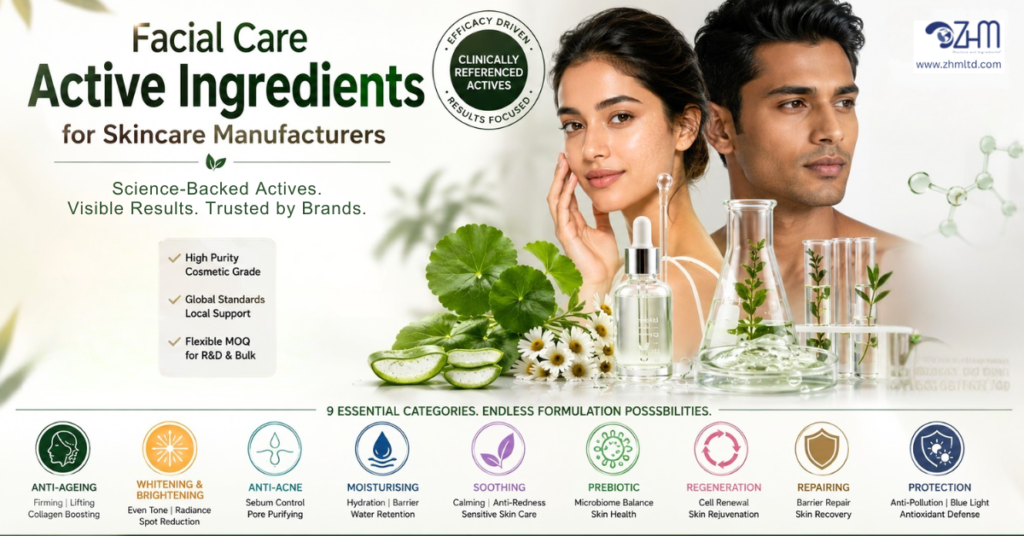
The facial skincare market in Bangladesh is experiencing rapid growth as consumers invest more in efficacious products. Cosmetic manufacturers require proven active ingredients that support anti-ageing, brightening, acne control, microbiome balance, and skin protection claims. Finding a reliable facial care active ingredients supplier is crucial for brands wanting to stand out. ZHM Group supplies facial care actives across all nine sub-categories — from anti-ageing peptides to prebiotic complexes — enabling Bangladesh manufacturers to create high-performance skincare products.
particularly women and men in the 20–45 age group — are investing seriously in their skincare routines. They are seeking products that go beyond basic cleansing and moisturising to deliver visible, measurable results: reduced wrinkles and fine lines, more even skin tone, controlled breakouts, healthier microbiome balance, and protection from the environmental damage unique to Bangladesh's urban environment.
This consumer shift is creating an extraordinary opportunity — and a demanding challenge — for Bangladesh's cosmetic manufacturers. Retailers, domestic brands, and export-oriented producers are all seeking to upgrade their facial skincare formulations with clinically-proven active ingredients. The difference between a premium skincare product and a basic moisturiser is not the emollient base or the packaging — it is the active ingredients: the functional compounds that interact with skin biology to produce real, measurable changes in skin appearance and health.
ZHM Group, Bangladesh's trusted beauty and personal care ingredient supplier with over 20 years of industry experience, supplies facial care active ingredients across all nine functional sub-categories — anti-ageing, whitening and brightening, anti-acne, moisturising, soothing, prebiotic, regeneration, repairing, and protection — to cosmetic manufacturers across Bangladesh.
This comprehensive guide covers every category of facial care active ingredient available from ZHM Group: what each active does, the biological mechanisms behind its effects, specific ingredient examples, formulation guidance, and how Bangladesh skincare manufacturers can build products that genuinely work — and that support credible, regulatory-compliant efficacy claims.
If you are a formulator, brand owner, or manufacturer looking to elevate your product line, this comprehensive guide covers everything you need to know about formulating with the right actives.
Active ingredients in facial skincare are functional compounds that, when applied to facial skin at effective concentrations, trigger specific biological responses — delivering measurable improvements in skin appearance, texture, tone, or structural integrity. They are the ingredients that make the difference between a product that simply feels pleasant and a product that visibly transforms skin.
When consumers buy a serum or face cream, they aren't just buying moisture; they are buying results. Facial care actives, or "active ingredients," are the specific compounds in a formulation scientifically proven to change the structure or function of the skin at a cellular level.
Unlike base ingredients (like water, thickeners, or emulsifiers) which simply deliver the product, actives are the "workhorses." They are responsible for delivering the specific claims made on your packaging—whether that's reducing wrinkles, clearing breakouts, or fading dark spots.
For manufacturers in Bangladesh, choosing the right facial care active ingredients supplier means accessing high-quality, stable, and tested compounds. The modern consumer is highly educated; they read INCI lists and look for specific trending ingredients. Including proven actives is no longer a luxury; it is the baseline requirement for a competitive skincare brand.
Understanding what makes an ingredient "active" is fundamental to formulation strategy:
| Parameter | Active Ingredients | Functional Ingredients |
| Primary role | Deliver the claimed skin benefit | Enable the formulation to work |
| Biological action | Direct on skin cells, receptors, or enzymes | Physical (moisturising film, emulsification) |
| Concentration | Low — 0.01–5% typically | Higher — 2–30% typically |
| Consumer perception | "Works on my skin" | "Feels nice on my skin" |
| Regulatory relevance | Supports efficacy claims | Generally not claimed |
| Examples | Peptides, Retinoids, AHA, Niacinamide | Emollients, Emulsifiers, Preservatives |
The global skincare industry has undergone a fundamental transformation over the past decade — moving from texture-driven formulations to efficacy-driven formulations. Consumers worldwide, including in Bangladesh, are no longer satisfied with creams that simply make skin feel soft. They want ingredients with clinical evidence, transparent mechanisms, and proven results.
This shift has three critical implications for Bangladesh cosmetic manufacturers:
Bangladesh cosmetics are regulated as cosmetics (not drugs) under BFSA guidelines and relevant BSTI standards. Efficacy claims for facial skincare products must be supported by the presence of recognised active ingredients and should be based on cosmetic-level mechanisms (improving appearance) rather than therapeutic claims (treating disease). ZHM Group provides technical guidance on claim-supportable active ingredient selection for Bangladesh regulatory compliance.
Below, we detail the nine essential categories of facial care actives necessary for a complete product portfolio.
Anti-ageing is consistently one of the most profitable sectors in skincare. As skin matures, natural collagen and elastin production slow down, leading to fine lines, wrinkles, and sagging. High-performance anti-ageing actives work to reverse or delay these signs.
Skin ageing is driven by two processes that work simultaneously: intrinsic ageing (chronological ageing — the natural biological decline of skin cell function over time) and photoageing (extrinsic ageing — accelerated by UV radiation, pollution, and oxidative stress). In Bangladesh's equatorial climate with high UV index and growing urban air pollution, photoageing is particularly significant and begins earlier than in temperate climates.
The visible manifestations of skin ageing — fine lines, wrinkles, loss of firmness, uneven skin tone, and decreased radiance — are primarily caused by declining collagen and elastin synthesis in the dermis, increased activity of collagen-degrading enzymes (matrix metalloproteinases or MMPs), decreased hyaluronic acid content, and slower epidermal cell renewal.
Anti-ageing active ingredients target these mechanisms directly. ZHM Group supplies the following anti-ageing actives for Bangladesh skincare manufacturers:
Peptides are short chains of amino acids (2–10 amino acids) that mimic natural signal molecules in the skin, stimulating specific biological processes. They are among the most scientifically advanced and commercially successful anti-ageing actives.
Palmitoyl Pentapeptide-4 (Matrixyl® — trade name by Sederma) The most clinically documented anti-ageing peptide. Mimics a fragment of collagen that signals fibroblast cells to increase production of Collagen I, III, and IV, Fibronectin, and Hyaluronic Acid. Clinical studies demonstrate measurable reduction in wrinkle depth and area at concentrations of 3ppm and above. Recommended use: 0.5–3% (as supplied solution containing 3ppm active).
Acetyl Hexapeptide-3 (Argireline® — trade name by Lipotec) Known as "Botox in a cream." Inhibits the release of neurotransmitters at the neuromuscular junction, reducing the intensity of facial muscle contractions that form expression lines. Evidence for reduction of expression lines around eyes and forehead. Recommended use: 5–10% (as supplied solution).
Palmitoyl Tripeptide-1 + Palmitoyl Tetrapeptide-7 (Matrixyl 3000®) A synergistic peptide combination that simultaneously stimulates collagen synthesis (Tripeptide-1) and reduces inflammation-driven collagen breakdown (Tetrapeptide-7 inhibits pro-inflammatory interleukin IL-6). Particularly effective for mature skin. Recommended use: 2–5% (as supplied solution).
Tripeptide-1 (GHK — Copper Peptide) GHK-Cu (Glycyl-L-Histidyl-L-Lysine Copper complex) is a naturally occurring peptide in human plasma that declines with age. Stimulates collagen and glycosaminoglycan synthesis, activates dermal fibroblasts, has antioxidant and wound-healing properties. Recommended use: 0.5–2%.
Retinol (Vitamin A) is one of the best-documented anti-ageing actives — it accelerates epidermal cell renewal, stimulates collagen synthesis, and reduces melanin production. However, pure retinol causes significant irritation, photosensitivity, and is restricted in cosmetics at concentrations above 0.3% in many markets.
Retinol alternatives provide the anti-ageing benefits of Vitamin A activity with improved tolerance:
CoQ10 is a lipid-soluble antioxidant naturally produced in skin cells for mitochondrial ATP synthesis. Levels decline significantly with age and UV exposure. In anti-ageing formulations:
These actives work primarily through collagen synthesis (building the skin's structural support), matrix metalloproteinase inhibition (stopping the enzymes that break down existing collagen), and wrinkle relaxation (smoothing the skin surface).
[Image Suggestion 1: A clean, laboratory-style image showing droplets of a clear serum next to fresh botanicals. Alt text: anti-ageing facial care active ingredients supplier Bangladesh]
In Bangladesh, achieving an even, radiant skin tone is a massive consumer priority. Sun exposure, pollution, and post-inflammatory hyperpigmentation (often from acne) lead to dark spots. Brightening actives work to fade these spots and give the skin a healthy glow.
Skin brightening and tone-evening is consistently the highest-priority skincare concern among Bangladesh consumers. The country's high UV index, genetic predisposition to hyperpigmentation, and cultural preference for radiant, even skin tone make this the single most commercially important active ingredient category for Bangladesh's cosmetic manufacturers.
Melanin — the pigment produced by melanocytes in the basal layer of the epidermis — is responsible for skin colour and for hyperpigmentation, dark spots, and uneven tone. The enzyme tyrosinase is the rate-limiting enzyme in melanin synthesis — inhibiting or regulating tyrosinase activity is the primary mechanism of most brightening actives.
Alpha-Arbutin is a glycosylated derivative of hydroquinone — providing the tyrosinase-inhibiting activity of hydroquinone without hydroquinone's safety concerns (hydroquinone is restricted or banned in cosmetics in many markets including several Bangladesh export destinations). Clinical studies demonstrate that Alpha-Arbutin at 1–2% delivers measurable melanin reduction and skin brightening. Alpha-form (not beta-arbutin) has approximately 10x greater tyrosinase inhibition efficiency.
Recommended use: 0.5–2% | Stability: stable in a wide pH range | Compatible with niacinamide for synergistic effect.
Niacinamide deserves special attention because it is one of the most commercially successful active ingredients in global skincare — and its multiple mechanisms make it particularly valuable for Bangladesh's skincare market. At 2–5%:
The anti-PIH (post-inflammatory hyperpigmentation) activity of niacinamide is particularly relevant for Bangladesh — where acne-related PIH leaves persistent dark marks on darker skin tones that are very difficult to resolve without appropriate actives.
Pure Vitamin C (L-Ascorbic Acid) is a potent brightening active and antioxidant but is notoriously unstable — oxidising rapidly in water-based formulations and losing activity within weeks. Stable Vitamin C derivatives provide the brightening and antioxidant benefits without the formulation challenges:
Kojic Acid (from fungal fermentation) and its derivatives (Kojic Acid Dipalmitate — more stable and less sensitising) inhibit tyrosinase through copper chelation, reducing melanin production. Widely used in Asian markets. Use Kojic Acid Dipalmitate at 1–3% for improved stability vs Kojic Acid itself.
When formulating for Bangladesh skin tones (typically Fitzpatrick Types IV and V), it is crucial to balance efficacy with safety. Aggressive bleaching agents can cause irritation and rebound hyperpigmentation. Furthermore, brands must be mindful of the strict regulations regarding "whitening" claims. The current industry trend favors terms like "brightening," "illuminating," and "even-tone," focusing on healthy, radiant skin rather than altering the natural skin color.
Acne is not just a teenage issue; adult acne is prevalent, exacerbated by humidity, pollution, and stress. Effective anti-acne products require actives that address the root causes: excess sebum, clogged pores, and bacterial growth.
Acne vulgaris affects an estimated 85% of adolescents and a significant proportion of adults in Bangladesh. The country's humid tropical climate, high rates of air pollution in urban centres, and cultural dietary patterns all contribute to acne prevalence. For Bangladesh cosmetic manufacturers, the anti-acne active ingredient category represents a major commercial opportunity — particularly for products targeting the 15–30 age group.
Salicylic Acid (BHA — Beta Hydroxy Acid) is the gold standard topical anti-acne active, with four distinct anti-acne mechanisms:
Cosmetic use: 0.5–2% in the EU (up to 2% in rinse-off, 0.5–2% in leave-on products) Bangladesh regulatory guidance: follow ASEAN Cosmetics Directive guidelines (2% leave-on maximum) Best formulation pH: 3.0–4.0 for maximum bioavailability and efficacy
Zinc is one of the most clinically documented minerals for acne management. In topical formulations:
As noted in the brightening section, niacinamide at 2–5% also provides significant anti-acne activity: reducing sebum excretion rate (by ~50% in some studies), minimising pore appearance, and critically — reducing post-inflammatory hyperpigmentation (PIH) that often causes more visible and persistent skin discolouration than the acne itself in darker skin tones.
For clean-label anti-acne formulations, several natural-origin actives provide antimicrobial and anti-inflammatory activity against acne:
These ingredients operate via exfoliation (keeping pores clear), sebum control (reducing the "food" for acne bacteria), and antibacterial action (killing the Cutibacterium acnes bacteria).
Proper hydration is the foundation of healthy skin. Dehydrated skin looks dull, emphasizes fine lines, and has a compromised barrier. Moisturizing actives don't just add water; they help the skin retain it.
Facial moisturisation at the active ingredient level goes beyond simple surface hydration (provided by emollients) to involve specific biological mechanisms that improve the skin's own water-retention capacity and barrier function.
Hyaluronic Acid (HA) — or its sodium salt, Sodium Hyaluronate — is the skin's primary natural moisturising molecule, capable of holding 1,000 times its own weight in water. In topical facial formulations, molecular weight determines the depth of effect:
| HA Molecular Weight | Skin Penetration | Primary Effect | Usage |
| High (>1,000 kDa) | Surface only | Instant surface plumping, smoothing film | 0.2–1% |
| Medium (50–300 kDa) | Into epidermis | Deeper moisturisation, sustained effect | 0.1–0.5% |
| Low (<50 kDa) | Into upper dermis | Long-lasting deep hydration | 0.05–0.2% |
| Crosslinked HA | Surface | Extended wear, enhanced substantivity | 0.1–0.5% |
Formulation tip: Multi-weight HA blends combining all three molecular weights in a single formulation (e.g., 0.3% high MW + 0.2% medium MW + 0.05% low MW) provide the most comprehensive moisturisation profile — immediate + sustained + deep hydration from a single serum or cream.
Ceramides are the primary lipid component of the stratum corneum's lamellar bilayer — the "mortar" between skin cells that prevents water loss and maintains barrier integrity. In facial skincare, ceramide depletion (from ageing, UV damage, over-washing, or skin conditions) leads to dry, sensitised, reactive skin.
Key ceramides for facial skincare formulations:
Use at 0.01–0.5% (ceramides are highly active at very low concentrations). For maximum barrier repair efficacy, combine with cholesterol and fatty acids (often supplied as a "ceramide complex" or "barrier lipid complex").
Sodium PCA (Sodium L-Pyrrolidone Carboxylate) is one of the key components of the skin's Natural Moisturising Factor (NMF) — the water-soluble compounds found in the stratum corneum that maintain skin hydration. Unlike HA, which is applied from outside, Sodium PCA directly replenishes the skin's own NMF:
Use at 1–3% in serums, toners, and lightweight moisturisers.
D-Panthenol converts to Pantothenic Acid (Vitamin B5) in skin — an essential co-factor for cell metabolism and proliferation. Its dual moisturising and repairing action makes it ideal for facial formulations:
Use at 0.5–5% — one of the most versatile and well-tolerated facial active ingredients.
With the rise of environmental stressors and aggressive skincare routines (like over-exfoliation), sensitive and reactive skin is increasingly common. Soothing actives are essential in products aimed at calming redness, irritation, and inflammation.
Sensitive skin is particularly prevalent in Bangladesh — where a combination of heat, humidity, air pollution, hard water, and the overuse of harsh cosmetic products creates chronic skin sensitivity and inflammation. Soothing active ingredients reduce redness, irritation, and the uncomfortable sensations (burning, stinging, tightness) associated with sensitive and reactive skin.
Alpha-Bisabolol is a naturally occurring sesquiterpene alcohol from German Chamomile (Matricaria chamomilla). It is one of the most widely used and best-tolerated soothing actives in cosmetics:
Use at 0.1–0.5% in soothing serums, sensitive skin moisturisers, and post-procedure products.
Allantoin (naturally occurring in comfrey, or produced synthetically of natural origin) provides two complementary effects:
Allantoin's combination of soothing and mild renewal activity makes it uniquely valuable in formulations for sensitive skin prone to dullness or slow cell turnover. Use at 0.1–2%.
Standardised Centella Asiatica extract (Gota Kola; standardised to Asiaticoside, Madecassoside, Asiatic Acid, and Madecassic Acid) is enjoying explosive growth in Asian skincare — particularly in Korean beauty — for its exceptional multi-action profile:
Use at 0.5–3% in soothing creams, sensitive skin care, post-acne repair, and K-beauty inspired formulations.
Standardised Aloe Vera extract (inner leaf gel, standardised to polysaccharide content) is one of the most trusted natural soothing actives, with broad consumer acceptance in Bangladesh:
Use at 2–10% in gel-type products, serums, and post-sun formulations.
Oat Beta-Glucan (from colloidal oatmeal) is one of the few natural soothing actives with an FDA monograph supporting its use for temporary relief of skin irritation. In facial skincare:
Use at 0.5–3% in sensitive skin serums, redness reduction creams, and calming masks.
One of the most significant shifts in skincare is the focus on the skin microbiome—the invisible ecosystem of bacteria living on our skin. When this microbiome is balanced, the skin is healthy, resilient, and clear. Prebiotic actives act as "food" for the good bacteria, helping them thrive.
Formulating with prebiotics is highly recommended for products targeting sensitive skin, acne, and rosacea, as these conditions are often linked to a disrupted microbiome.
The skin microbiome — the complex community of bacteria, fungi, and other microorganisms living on and in the skin — has emerged as one of the most exciting and commercially significant frontiers in skincare science. Research over the past decade has established that a balanced, diverse skin microbiome is fundamental to skin health, barrier function, and immunity.
Lactobacillus-dominant microbiomes are associated with healthy, resilient, non-reactive skin. Dysbiosis — microbiome imbalance — is linked to acne (Cutibacterium acnes overgrowth), atopic dermatitis, rosacea, and sensitive skin. Bangladesh's urban consumers, whose skin microbiomes are challenged by pollution, synthetic product overuse, and climate stress, are prime candidates for microbiome-supporting skincare.
Prebiotic skin actives selectively nourish beneficial skin bacteria while inhibiting pathogenic species — restoring microbiome balance through nutritional support rather than antimicrobial action:
Alongside prebiotics, postbiotics — the bioactive compounds produced by beneficial bacteria — are gaining commercial traction:
Skin cell turnover slows down as we age, leading to a dull complexion and uneven texture. Regeneration actives stimulate the skin to shed old cells and produce new ones more rapidly.
Skin regeneration actives stimulate the natural processes of cellular renewal and tissue remodelling that slow significantly with ageing and environmental damage.
Plant stem cell extracts contain epigenetic factors, metabolites, and signal molecules that protect the regenerative capacity of skin's own stem cells:
Use at 0.1–1% in premium anti-ageing and regenerating formulations.
Alpha Hydroxy Acids (AHAs) accelerate skin renewal by loosening the bonds between corneocytes, promoting shedding of dull, dead surface cells and revealing brighter, smoother skin below:
AHA + BHA combinations: Combining Glycolic or Lactic Acid with Salicylic Acid provides simultaneous surface exfoliation (AHA) and pore-deep exfoliation (BHA) — powerful for acne-prone, dull, and ageing-acne combination skin types common in Bangladesh.
When the skin barrier is damaged—whether by harsh weather, pollution, or overly aggressive skincare—it loses water rapidly and becomes vulnerable to irritants. Repairing actives are necessary to rebuild this defensive wall.
Repairing actives address damaged skin — whether from acne scarring, UV damage, environmental exposure, or post-procedure recovery. They support the skin's own healing processes to restore normal barrier function and appearance.
For consumers recovering from cosmetic procedures (chemical peels, laser, dermabrasion):
Prevention is better than cure. Modern skincare must protect against environmental aggressors that cause premature ageing and damage.
Skin in Bangladesh's major cities faces a unique combination of environmental stressors: very high UV index (UV Index 10–12 in summer months), growing levels of fine particulate air pollution (PM2.5 and PM10 in Dhaka exceed WHO safe levels), and increasingly prevalent blue light exposure from smartphones, computers, and LED lighting.
Based on consumer trends, climate factors, and the specific skin concerns prevalent in Bangladesh, the following active ingredients represent the highest commercial opportunity for Bangladesh skincare manufacturers:
The climate and consumer preferences in Bangladesh dictate specific formulation strategies. The high humidity and heat mean heavy creams are often unpopular. Therefore, the market leans heavily towards lightweight serums, gel-creams, and toners that are packed with potent actives.
Top Priority Actives for Bangladesh:
As a leading facial care active ingredients supplier, ZHM Group ensures that manufacturers have access to these high-demand raw materials in formats suited for lightweight, stable formulations.
Consumers want multi-functional products, but formulators know that mixing certain actives can lead to disaster—either the ingredients cancel each other out, or they cause severe skin irritation.
Crucial Compatibility Rules:
Always consult the Technical Data Sheets (TDS) provided by your supplier for specific pH ranges, solubility (water vs. oil soluble), and recommended usage rates.
Combining multiple active ingredients in a single formulation multiplies their benefits — but also introduces compatibility challenges. The most common issues:
pH Conflicts: AHAs (optimal pH 3.5–4.0) and Vitamin C (optimal pH 2.5–3.5) are incompatible in a single formulation with niacinamide and hyaluronic acid (optimal pH 5.0–7.0). Solution: separate formulations (morning serum vs evening serum) or encapsulation of pH-sensitive actives.
Stability Conflicts: Pure Vitamin C (L-Ascorbic Acid) oxidises in the presence of certain metals and at high pH. Solution: use stable Vitamin C derivatives (Sodium Ascorbyl Phosphate, Ascorbyl Glucoside) that are pH-stable.
Permeation Competition: When multiple actives compete for the same skin penetration pathway, efficacy of each may be reduced. Solution: layering products in a routine rather than combining all actives in a single product.
Sensitisation Concerns: Some actives (retinoids, high-concentration AHAs) can sensitise skin when combined with other bioactive ingredients. Solution: start at lower concentrations, introduce actives gradually, and avoid combining retinoids with high-strength AHA in a single leave-on product.
ZHM Group's Formulation Support: Our technical team provides specific compatibility guidance for all active ingredients we supply — helping your R&D team develop stable, efficacious formulations that avoid these common pitfalls.
Choosing the right raw material partner is as critical as the formula itself. ZHM Group is the premier facial care active ingredients supplier in Bangladesh, trusted by top cosmetic manufacturers.
Here is why manufacturers choose ZHM:
The most clinically documented and commercially successful anti-ageing actives for facial skincare are: signalling peptides — particularly Palmitoyl Pentapeptide-4 (Matrixyl®) which stimulates collagen I, III, and IV synthesis, and Acetyl Hexapeptide-3 (Argireline®) which relaxes expression line-causing muscle contractions; Coenzyme Q10 (ubiquinone) at 0.3–1% for antioxidant and collagen-synthesis support; retinol alternatives such as Hydroxypinacolone Retinoate (HPR) and Bakuchiol for cell renewal without the irritation of pure retinol; and Hyaluronic Acid in multiple molecular weights for immediate and sustained volume plumping. For Bangladesh's skincare market, Bakuchiol-based anti-ageing formulations are particularly well-positioned as a natural, clean-label retinol alternative — combining proven efficacy with excellent tolerability for Bangladesh's predominantly darker skin tones that are more prone to retinol-related PIH. ZHM Group supplies all of these anti-ageing actives to cosmetic manufacturers across Bangladesh.
For Bangladesh's predominantly Fitzpatrick IV–VI skin tones — which are more prone to hyperpigmentation, post-inflammatory darkening (PIH), and melasma than lighter skin types — the most effective brightening actives target melanin production through multiple complementary pathways simultaneously. Alpha-Arbutin (1–2%) provides direct tyrosinase inhibition; Niacinamide (4–5%) inhibits melanosome transfer and reduces PIH from existing acne lesions; stable Vitamin C derivatives (Sodium Ascorbyl Phosphate at 5–10%, or 3-O-Ethyl Ascorbic Acid at 1–3%) provide antioxidant protection against UV-triggered melanin production. Combining Alpha-Arbutin + Niacinamide + Vitamin C derivative in a single brightening serum provides three complementary brightening mechanisms simultaneously — delivering more comprehensive and faster results than any single active alone. Kojic Acid Dipalmitate (1–2%) can be added for additional tyrosinase inhibition benefit. ZHM Group supplies all of these brightening actives with full INCI documentation for Bangladesh cosmetic manufacturers.
Niacinamide is the amide form of Vitamin B3 (Niacin), a water-soluble vitamin that plays multiple essential roles in skin cell metabolism. In topical facial skincare formulations at 2–5%, niacinamide delivers six scientifically documented benefits simultaneously, making it one of the most commercially valuable single active ingredients available: (1) Brightening — inhibits transfer of melanosomes from melanocytes to keratinocytes, reducing pigmentation and PIH; (2) Barrier improvement — stimulates ceramide and free fatty acid synthesis, improving TEWL and skin barrier function; (3) Sebum reduction — reduces sebum excretion rate by approximately 50% at 2%, minimising pore appearance and acne risk; (4) Anti-inflammatory — reduces redness and skin reactivity; (5) Anti-ageing — stimulates collagen synthesis and improves skin texture and fine line appearance at higher concentrations; (6) Antioxidant — precursor to NAD+ and NADP+, supporting cellular energy and antioxidant defence. This multi-functional profile makes niacinamide arguably the single most valuable facial care active ingredient for Bangladesh's market — addressing brightening, acne, and barrier concerns in one ingredient.
Prebiotic skin actives selectively nourish beneficial skin bacteria (primarily Lactobacillus and Bifidobacterium species on skin) while not supporting pathogenic bacteria (Cutibacterium acnes in acne, Staphylococcus aureus in eczema-prone skin). The primary prebiotic actives used in facial skincare formulations include: Inulin (0.5–2%) — a naturally occurring fructooligosaccharide that forms a moisturising film while selectively feeding beneficial skin lactobacilli; Fructooligosaccharides (FOS) (0.3–1%) — short-chain prebiotic fibres with strong bifidogenic selectivity; and Xylooligosaccharides (XOS) (0.1–0.5%) — highly selective prebiotic with stronger bifidogenic potency at lower concentration than FOS. In formulations, these are often combined with postbiotic actives — such as Lactobacillus ferment lysate or fermented botanical extracts — which provide the direct beneficial effects of probiotic metabolites (lactic acid, peptides, polysaccharides) without the stability challenges of live cultures. ZHM Group supplies prebiotic facial active ingredients with full INCI documentation and technical formulation guidance for Bangladesh cosmetic manufacturers.
Yes — ZHM Group supplies anti-acne active ingredients to cosmetic manufacturers across Bangladesh, including salicylic acid actives, zinc actives (Zinc PCA, Zinc Gluconate), niacinamide, natural antimicrobial actives (Tea Tree extract), and other sebum-regulating and anti-inflammatory ingredients. All anti-acne actives are supplied with full INCI name, CAS number, Certificate of Analysis (CoA), Safety Data Sheet (SDS), and recommended usage level documentation — suitable for BFSA cosmetic product registration. We provide formulation guidance on appropriate concentrations (salicylic acid: 0.5–2% leave-on), pH requirements (optimal pH 3.5–4.0 for salicylic acid), and compatible co-ingredients. Contact our team at +88029634158 or [email protected] for current pricing, availability, and to receive samples for initial formulation evaluation.
Soothing actives and repairing actives address two distinct but related aspects of skin distress. Soothing actives work immediately — they reduce the inflammatory signals and sensory nerve activity that produce the subjective and visible signs of skin reactivity: redness, stinging, burning, and tightness. Key soothing actives include bisabolol (reduces inflammatory mediators), allantoin (anti-irritant), Centella Asiatica extract (anti-inflammatory through multiple pathways), and oat beta-glucan (forms a calming film). Repairing actives, by contrast, address the underlying structural damage that makes skin vulnerable to reactivity in the first place — they rebuild the skin barrier, stimulate healthy cell renewal, and restore normal skin function. Key repairing actives include ceramide complexes (structural barrier repair), panthenol (cell proliferation and barrier synthesis support), growth factor mimetic peptides (tissue remodelling), and phytosphingosine (ceramide precursor synthesis). In practice, the most effective formulations for sensitive, reactive, or compromised skin combine both categories — soothing actives to provide immediate comfort and reduce further inflammatory damage, and repairing actives to address the underlying barrier deficit that causes the sensitivity. ZHM Group can help Bangladesh cosmetic manufacturers select the right combination of soothing and repairing actives for their specific formulation needs.
Are you a cosmetic manufacturer or personal care product company in Bangladesh looking to source quality Facial Care Active Ingredients for your skincare formulations?
ZHM Group supplies certified, cosmetic-grade facial care actives with full INCI documentation, Certificate of Analysis (CoA), and Safety Data Sheets (SDS) — across all nine facial care active categories: anti-ageing, whitening, anti-acne, moisturising, soothing, prebiotic, regeneration, repairing, and protection.
We offer flexible MOQ for R&D batches and competitive pricing for bulk production orders. Our technical team provides formulation support, usage level guidance, and compatibility assessment — helping your team develop effective, claim-supported facial skincare products.
Request Technical Data Sheet
Contact Us Today: +88029634158 | +8801726968877 | [email protected]