ভিটামিন A সমৃদ্ধ স্মার্ট সুগার! — এখন বাজারে
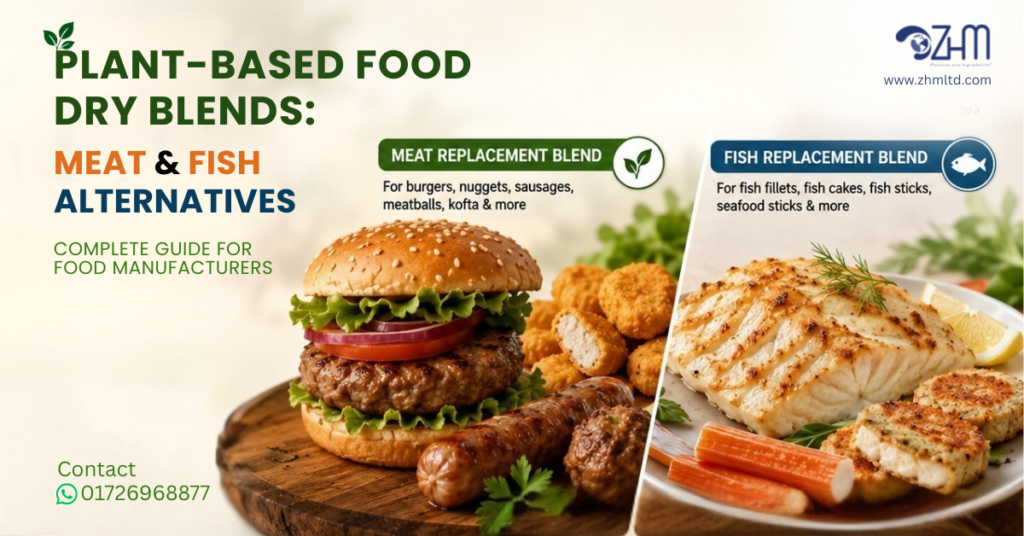
Plant-Based Food Dry Blends: Meat & Fish Replacement — Complete Guide for Food Manufacturers
Bangladesh's food industry is standing at a significant inflection point. The convergence of three powerful forces — rising health consciousness among urban consumers, growing environmental awareness, and the practical economic advantage of protein diversification — is creating real and growing demand for plant-based food products across the country's food manufacturing sector.
For decades, Bangladesh's food protein landscape was dominated by conventional meat and fish — deeply embedded in cultural food traditions and supported by well-established supply chains. But times are changing. Bangladesh's rapidly expanding middle class in Dhaka, Chittagong, Sylhet, and other urban centres is increasingly receptive to plant-based alternatives, not as a complete replacement for traditional foods, but as a complement — providing protein variety, supporting health goals, and reducing reliance on more expensive animal proteins.
At the same time, Bangladesh's export-oriented food manufacturers are recognising a significant commercial opportunity. Global markets — particularly the GCC countries, Southeast Asia, the United Kingdom, and increasingly North America and Europe — are experiencing explosive growth in demand for halal-certified plant-based food products. Bangladesh food manufacturers, already strong in halal-certified food production, are uniquely positioned to supply this market — if they can access the right ingredients to formulate competitive plant-based products.
The challenge for most Bangladesh food manufacturers considering plant-based product development is formulation complexity. Achieving realistic meat-like or fish-like texture, flavour, appearance, and nutritional profile from plant ingredients requires combining multiple ingredients — proteins, starches, fibres, hydrocolloids, binders, and flavour systems — in precise ratios. For a small or medium-scale food manufacturer without a dedicated food science team, this complexity is a significant barrier to entry.
This is where ready-to-use dry blends from ZHM Group revolutionize the production landscape. Our advanced ingredient systems enable Bangladesh food manufacturers to develop highly convincing meat-free and fish-free products without the crippling complexity of sourcing, testing, and combining dozens of individual, hard-to-source ingredients. By providing a single, comprehensive solution, our Meat Replacement Blend and Fish Replacement Blend act as highly engineered, formulated systems that simplify plant-based product development, drastically reduce research and development (R&D) overheads, and guarantee batch-to-batch consistency.
As a premier vegan food ingredient supplier BD, ZHM Group is committed to empowering the local food and beverage sector. Whether you are an established fast-moving consumer goods (FMCG) giant looking to launch a new line of vegan burger patties, or a frozen food startup aiming to introduce plant-based fish cakes to the local market, understanding the functionality, application, and economic benefits of these blends is critical. This comprehensive guide will serve as your ultimate technical and commercial resource for navigating plant based food blends Bangladesh, detailing everything from ingredient composition and texture mechanisms to nutritional profiling and market dynamics.
Ready-to-use dry blends from ZHM Group solve this problem. Our Meat Replacement Blend and Fish Replacement Blend are pre-formulated ingredient systems designed specifically for plant-based food manufacturing — enabling Bangladesh food manufacturers to develop meat-free and fish-free products with simplified formulation, consistent quality, and faster time-to-market. Simply mix with water, shape, and cook — and your plant-based product is ready.
Plant-based food dry blends are pre-formulated, shelf-stable powder mixtures that combine multiple functional food ingredients — plant proteins, starches, dietary fibres, hydrocolloids, binders, and in some cases natural flavour systems — in specific, tested ratios that deliver consistent plant-based food products when reconstituted and processed.
The concept of ready-to-use blends is well established in conventional food manufacturing — think bread mixes, cake mixes, and soup powder sachets. Plant-based dry blends apply the same principle to the more complex challenge of creating meat and seafood alternatives from plant ingredients.
In the highly competitive landscape of industrial food manufacturing, efficiency, consistency, and speed to market are paramount. Achieving these goals when formulating complex products like meat and seafood analogues is notoriously difficult. This brings us to the crucial role of ready-to-use dry blends.
Ready-to-use dry blends are sophisticated, pre-formulated ingredient mixtures designed to serve as the structural and functional foundation of a final food product. Instead of a manufacturer buying pea protein from one supplier, methylcellulose from another, flavourings from a third, and starches from a fourth—and then attempting to engineer the perfect ratio through costly trial and error—a ready-to-use blend combines all these components.
These blends integrate multiple food ingredients, including highly functional plant proteins, native and modified starches, dietary fibres, specialized binding agents (hydrocolloids), and complex flavouring or flavour-masking components. They are mixed in exact, scientifically validated ratios in controlled environments. For the end-user (the food manufacturer), producing the final plant-based product becomes a dramatically simplified process: the dry blend is typically hydrated by simply mixing it with water, and sometimes a fat source (like vegetable oil), followed by standard forming and cooking procedures.
The shift toward pre-formulated plant based food ingredient Bangladesh systems offers transformative advantages for production facilities:
At a molecular level, ready-to-use blends are masterclasses in food physics and chemistry. When the dry blend is introduced to water and mechanical shear (mixing), a cascade of functional reactions occurs. The plant proteins begin to hydrate and unfold. The starches absorb water and prepare to gelatinize upon heating. The hydrocolloid binders, such as methylcellulose, dissolve into the aqueous phase, ready to form a unique thermo-reversible gel when the consumer cooks the product.
This intricate dance of hydration, emulsification, and gelation is what transforms a simple powder into a matrix that remarkably mimics the complex structure of animal muscle tissue. ZHM Group's blends are meticulously engineered to control the rate of hydration and the final viscosity, ensuring the mixture can run seamlessly through standard meat processing equipment—such as bowl choppers, mixers, and patty formers—without requiring manufacturers to invest in entirely new, specialized machinery.
Plant-based dry blends are typically reconstituted by combining with water (and sometimes other liquid ingredients such as vegetable oils or flavour solutions) in a defined ratio, then processed through mixing, shaping, and cooking (pan-frying, baking, steaming, or deep-frying) to produce the finished plant-based food product.
The functional ingredients within the blend interact during reconstitution and cooking to create the texture, binding, and appearance of the finished product:
ZHM Group offers specialized, high-performance formulations tailored for the two largest categories in the alternative protein sector. Below is the full product list for our ready-to-use dry blends sub-category:
Sub-category: Dry Blends — Ready-to-Use:
Contact ZHM Group directly for full formulation specifications, detailed nutritional profiles, Certificate of Analysis (CoA), and custom application guidance tailored to your specific processing equipment.
Meat Replacement Blend is a complete, ready-to-use plant-based dry blend formulated for the production of meat-free analogue products. It is specifically designed for food manufacturers who want to produce plant-based burgers, nuggets, sausages, meatballs, and similar products without the complexity of sourcing and combining individual plant protein, starch, and binder ingredients.
The blend is a dry powder that, when hydrated with water and processed according to the application-specific instructions, produces a raw plant-based product that can be shaped, seasoned, and cooked using standard food manufacturing equipment.
The holy grail of the plant-based industry is replicating the experience of eating a traditional beef burger or chicken nugget. It is not merely about matching the protein content; it is about replicating the bite, the chew, the juiciness, and the exact way the product behaves on a hot pan or grill. The meat replacement blend Bangladesh market is expanding rapidly, and mastering this technology is essential for local manufacturers.
Professional meat replacement blends are formulated systems combining several functional ingredient categories. While exact proprietary formulations vary by manufacturer, the key functional components and their roles include:
Plant Protein Base (40–60% of blend): This is the structural backbone. We utilize highly refined protein isolates and concentrates. Pea protein is favoured for its non-allergenic status and clean label appeal, while soy and wheat (gluten) offer exceptional elasticity and meat-like fibrous structures. These proteins provide the essential "bite" and nutritional density.
The protein fraction is the structural backbone of the meat analogue — it provides the primary "bite," protein nutrition, and cooking behaviour. Common plant proteins used include:
Starch System (10–20% of blend): Starches act as fillers and texturizers. During cooking, they gelatinize, helping to bind the matrix together, retain moisture, and contribute to the succulent, juicy mouthfeel that consumers expect from a high-quality burger.
Starches contribute to juiciness, binding, and the overall texture of the cooked product:
Dietary Fibre (5–15% of blend, e.g., Bamboo, Cellulose, or Pea Fibre): Fibres are crucial for two reasons. First, they provide structural integrity and a slightly coarse texture that mimics animal muscle fibres. Second, they are highly effective at holding water and fat within the matrix during cooking, preventing the product from drying out and ensuring a juicy bite (minimizing cook-loss).
Fibres contribute to texture, moisture management, and nutritional enrichment:
Hydrocolloids and Binders (2–8% of blend): This is arguably the most critical technological component. Unlike traditional meat, which uses animal proteins (like myosin) to bind together when cooked, plant proteins do not naturally form strong cohesive gels under heat in the same way. Methylcellulose possesses a unique property called thermo-reversible gelation. It is a liquid at cold temperatures (allowing for easy mixing and forming of the patty) but forms a firm, meat-like gel when heated (keeping the burger intact on the grill). Upon cooling in the mouth, it softens, perfectly mimicking the melt-in-the-mouth feel of animal fat.
These ingredients hold the shaped product together during and after cooking:
Flavour and Colour Components (2–8% of blend): Plant proteins, particularly pea and soy, often carry inherent "beany," "earthy," or "bitter" off-notes. Our blends incorporate advanced natural flavourings, yeast extracts, and proprietary masking technologies to neutralize these undesirable flavours and establish a robust, savory, umami-rich foundation that mimics the exact Maillard reaction (browning and flavour development) of cooking meat.
The most technically challenging aspect of plant-based meat development is replicating the fibrous, layered, tender-yet-firm texture of real meat. This texture arises from the aligned muscle fibre structure of animal muscle tissue — which plant proteins cannot naturally replicate.
How does a powder turn into a fibrous, chewy burger? The magic lies in the manipulation of proteins.
In meat replacement blends, texture is achieved through several mechanisms:
Protein Denaturation and Alignment: When the blend is heated during cooking, plant proteins unfold (denature) and form new bonds with adjacent protein molecules — creating a continuous, cohesive protein matrix. The type of protein, its concentration, and cooking temperature all influence the texture of this matrix.
During the processing of the raw materials (often before they even become part of our dry blend, through processes like extrusion), plant proteins are subjected to heat and mechanical shear. This causes the tightly coiled protein molecules to unfold (denature). As they cool, they realign and cross-link into linear, fibrous structures that closely resemble the striated muscle fibres of animal meat.
Thermal Gelation of Methylcellulose: A key innovation in plant-based meat texturisation is the use of methylcellulose — a modified cellulose that uniquely gels when heated. At cooking temperatures (60–80°C), methylcellulose transforms from a liquid hydrocolloid to a firm gel, mimicking the way animal fat transforms during cooking and contributing to the "juiciness" and structural integrity of the product.
Extrusion Compatibility: Our blends are designed to work synergistically with Textured Vegetable Protein (TVP), which is often produced via twin-screw extrusion. The dry blend acts as the cohesive "glue" (the binder and flavour phase) that holds the hydrated TVP chunks (the muscle phase) together.
Gelation Mechanisms: As mentioned, the precise ratio of starches to hydrocolloids ensures that upon thermal treatment (frying, baking, grilling), a three-dimensional gel network is formed. This network entraps water and oil droplets, creating the sensation of meat juices releasing upon chewing.
Starch Gelatinisation: Starch granules absorb water and swell during cooking, gelatinising to form a viscous continuous phase that contributes to the tender, moist texture of the finished product.
Fibre Network: Dietary fibres in the blend contribute a fibrous structural element that, when aligned during shaping and cooking, can provide a degree of meat-like bite and chewiness.
Plant-Based Burger Patties: The most commercially important application. The blend is hydrated, seasoned, shaped into patties, and either pan-fried or griddled. Key technical parameters: water addition ratio (typically 40–60% water by blend weight), patty thickness, cooking temperature (180–200°C surface), internal temperature target (75°C for food safety).The classic application. The blend provides excellent cold-forming capabilities for industrial patty formers, ensuring the burgers hold their shape during freezing, packaging, and subsequent high-heat grilling.
Plant-Based Nuggets and Schnitzels: Hydrated blend is shaped into nugget portions, coated with a crispy batter or breadcrumb coating, and deep-fried or oven-baked. The blend must have sufficient binding to hold the nugget shape through coating and cooking processes. By adjusting the formulation to yield a lighter colour and a slightly softer, shorter bite, the blend serves as the perfect core for plant-based nuggets, ready to be battered, breaded, and flash-fried.
Plant-Based Sausages and Frankfurters: The blend is hydrated, emulsified with fat (typically sunflower or coconut oil), filled into casings (natural or artificial), and heat-processed. The protein-starch matrix provides the characteristic snap and texture of processed meat sausages. The blend can be formulated to create the specific emulsified, firm, and "snap" texture required for vegan sausages, holding up exceptionally well within plant-based or cellulose casings.
Plant-Based Meatballs and Kofta: Highly relevant for Bangladesh's food culture — plant-based kofta (meatball equivalents) using the Meat Replacement Blend can be incorporated into traditional sauce-based dishes. The blend must have excellent binding to maintain ball integrity during simmering in sauce. Highly relevant for the South Asian market, the blend easily incorporates heavy spices, onions, and herbs to create dense, flavourful vegan koftas that maintain their structural integrity when simmered in rich gravies and curries.
Protein-Enriched Convenience Foods: The Meat Replacement Blend can be incorporated into ready meals, protein bars, and convenience food products where a meat-like textured protein component is desired. Beyond traditional centre-of-plate applications, the high-protein nature of the blend allows for innovative uses in the expanding healthy snack sector.
Modern consumers are scrutinizing nutritional labels more than ever. Our Meat Replacement Blend is formulated not just for taste, but for superior nutrition. Meat replacement blends are formulated to provide a nutritionally competitive alternative to animal meat:
Integrating our blend into your existing production line is straightforward. While specific parameters will vary based on the desired end product, a standard industrial protocol involves:
While plant-based meat has dominated headlines, the next major frontier in alternative proteins is seafood. Overfishing, heavy metal contamination (like mercury), microplastics in oceans, and a rising prevalence of seafood allergies are driving immense consumer interest in plant-based fish. Creating a convincing fish analogue, however, requires an entirely different technological approach than meat. The fish replacement blend BD market represents a massive, untapped opportunity for forward-thinking manufacturers.
ZHM Group's Fish Replacement Blend is a complete, ready-to-use dry blend formulated for the production of fish-free seafood analogue products. It enables Bangladesh food manufacturers to create plant-based alternatives to popular fish-based products — including fish fillets, fish cakes, fish sticks, and seafood analogues — without using any animal-derived fish ingredients.
Fish replacement presents distinct formulation challenges compared to meat replacement: the delicate, flaky texture of cooked fish, its distinctive mild flavour profile, its white or pale pink colour, and its lighter bite compared to red meat all require a specifically formulated blend system.
Fish muscle is fundamentally different from beef or chicken. It is lighter, more delicate, highly moisture-dense, and possesses a unique "flaky" structure that easily breaks apart. ZHM Group’s Fish Replacement Blend is specifically engineered to replicate these precise characteristics.
Plant Protein Base (35–55%): We typically utilize lighter-coloured, milder-tasting proteins for our fish blends, such as mung bean protein, specific fractions of soy protein, or fava bean protein. These provide a neutral canvas that won't overpower the delicate seafood flavours.
Fish analogues require plant proteins that form a delicate, flaky gel rather than the dense, chewy matrix of meat analogues:
Starch and Hydrocolloid System (15–25%): The texture modifier system is critical in fish analogue formulation — it determines the characteristic flakiness and moisture retention:
Flavour System (2–6%): Natural flavour systems that replicate the mild, oceanic flavour of fish without using actual fish ingredients:
Binder and Texture Modifier (3–8%):
Colour Components (0.5–2%): Fish products are characteristically white or pale. Colour components in fish replacement blends are designed to maintain a clean white appearance in the raw state and the appropriate opaque white colour when cooked — replicating the visual transformation of real fish during cooking.
Advanced Thickeners and Gelling Agents (Carrageenan, Konjac, Methylcellulose, Alginate): This is the core of the fish replacement technology. To achieve the soft, delicate bite of fish, we rely heavily on marine-derived hydrocolloids (like carrageenan, extracted from red seaweed) and root-derived gums (like konjac). These ingredients interact synergistically to form soft, elastic gels that mimic the mouthfeel of white fish.
Authentic Fish Flavouring Systems: Replicating the taste of the sea without using fish is an art. Our blends incorporate sophisticated vegan flavourings derived from various algae, seaweeds (like kelp and kombu), and specialized yeast extracts. These impart the authentic iodine, umami, and slightly briny notes characteristic of fresh seafood.
Functional Starches: Specific modified starches are used to control the opacity of the final product (giving it the characteristic bright white appearance of cooked fish) and to manage moisture release, ensuring the product feels succulent rather than rubbery.
The greatest technical hurdle in plant-based seafood is the "flake." When you press a fork into a cooked piece of cod or tilapia, it separates into distinct, layered flakes (myotomes) separated by thin layers of connective tissue (myocommata).
Our Fish Replacement Blend achieves this through sophisticated protein gelation mechanisms and controlled phase separation. When the blend is mixed with water and subjected to specific thermal processing, the hydrocolloids form a matrix that is strong enough to hold the product together during handling and cooking, but brittle enough to shear (flake) cleanly in the mouth, exactly like cooked fish muscle.
For highly advanced applications (like whole-cut vegan fillets), manufacturers can use our blends in conjunction with layering technologies or specialized extrusion dies to create oriented, fibrous structures that perfectly mimic the striations of fish meat.
The distinctive flaky texture of cooked fish arises from the structure of fish muscle tissue — short muscle fibres arranged in distinct myotomes (muscle segments) separated by connective tissue. During cooking, the connective tissue dissolves and the muscle segments separate into characteristic flakes.
Replicating this structure in a plant-based system requires:
Carrageenan Gel Network: Kappa carrageenan forms a brittle, structured gel that, when subjected to the mechanical forces of eating (chewing), breaks apart in a flaky manner similar to real fish. The gel strength is carefully calibrated — too firm produces a rubbery texture; too soft produces a mushy, unacceptable product.
Protein Matrix: Plant proteins denature during cooking to form a continuous matrix within the carrageenan gel, providing protein nutrition and contributing to the cohesive structure that holds the "flakes" together until eaten.
Directional Alignment: During shaping (extrusion or pressing into fillet shapes), the protein-starch-hydrocolloid matrix is aligned in a direction that, after cooking, allows flaking to occur along the aligned planes — further replicating the experience of real fish fillet.
Plant-Based Fish Fillets: The most direct replacement for conventional fish fillet portions. The blend is hydrated, shaped into fillet shapes (typically using a mould or extrusion process), and cooked — baked, grilled, or pan-fried. The cooked product has a flaky, white interior with an appropriately firm exterior — closely replicating the eating experience of baked white fish.
Fish Fillet Alternatives: The standard application. Perfect for creating classic battered or breaded "fish and chips" style fillets for the frozen food aisle or quick-service restaurant (QSR) sector.
Plant-Based Fish Cakes and Balls: Fish cakes are one of the most popular processed fish products in Bangladesh. Plant-based fish cakes made with ZHM's Fish Replacement Blend provide a convincing alternative — with the characteristic texture, golden exterior, and savoury flavour of conventional fish cakes, but entirely free from fish allergen and suitable for consumers with fish allergies or avoidance. Extremely popular in South Asian and Southeast Asian cuisines. The blend provides the perfect binder and base for highly spiced, deep-fried fish cakes, or bouncy, chewy fish balls for soups and curries.
Fish Sticks and Fish Fingers: Shaped blend portions are coated in breadcrumbs and deep-fried or oven-baked — producing plant-based fish sticks with a crispy exterior and flaky interior that closely resemble conventional fish finger products. Particularly relevant for children's food products and school meal programmes.
Plant-Based Seafood Sticks and Crab Analogues (Surimi Alternative): The blend can be processed to produce plant-based alternatives to surimi (imitation crab/seafood sticks) — a popular product in Japan, Korea, and Southeast Asia with growing presence in Bangladesh urban food service. By manipulating the colourants (adding natural paprika extract for a red hue) and the flavour profile, the blend serves as an excellent base for vegan crab sticks or surimi alternatives.
Tuna Replacements: When hydrated with less water and combined with oil and specific flaking techniques, the blend can mimic the texture of canned tuna, ideal for vegan tuna salad sandwiches or sushi rolls.
One of the most commercially significant advantages of Fish Replacement Blend is its complete freedom from fish allergen. Fish is one of the 14 major allergens regulated in most markets globally, including Bangladesh under BFSA regulations. Consumers with fish allergies — which can cause severe allergic reactions — currently have very limited product choices in Bangladesh's food market.
A plant-based fish alternative made with Fish Replacement Blend can be manufactured in a fish-allergen-free facility and labelled "contains no fish" — opening the product to:
One of the most profound benefits of our Fish Replacement Blend is safety. Seafood allergies are among the most common and severe food allergies globally, often developing in adulthood and causing anaphylaxis.
Because ZHM Group’s Fish Replacement Blend is strictly formulated from terrestrial plants, algae extracts, and synthetic/fermentation-derived ingredients, it is 100% free from fish, crustacean, and molluscan allergens.
This opens up an entirely new demographic for food manufacturers: consumers who love the taste of seafood but are medically prohibited from consuming it. Producing a "safe for seafood allergy sufferers" product provides a massive unique selling proposition (USP) in the retail market.
Furthermore, unlike ocean-caught fish, our plant-based blends contain absolutely zero heavy metals (like mercury or lead), zero microplastics, and zero parasites, offering a significantly cleaner and safer nutritional profile.
To fully appreciate the value of sourcing a high-quality plant based food ingredient Bangladesh, one must understand the rapidly evolving local market dynamics. Bangladesh is no longer just a traditional agricultural economy; it is a rapidly urbanizing, globally connected market with shifting consumer behaviours.
Bangladesh's domestic plant-based food market is at an early but accelerating stage of development. Several factors are converging to drive growth:
Health consciousness: Urban Bangladeshi consumers — particularly the 25–45 age group in Dhaka, Chittagong, and other major cities — are increasingly aware of the links between high animal protein consumption and non-communicable diseases (cardiovascular disease, diabetes, certain cancers). Plant-based proteins are perceived as a healthier alternative.
Economics: Plant-based protein products, when made with efficient dry blend systems, can be priced competitively with mid-range meat products — particularly important given Bangladesh's price-sensitive consumer market.
Protein diversity: Many Bangladeshi Muslims who avoid pork are accustomed to seeking protein variety. Plant-based options extend this diversity further, particularly for consumers managing health conditions.
Food service growth: Bangladesh's expanding quick-service restaurant (QSR) sector and growing café culture are driving demand for plant-based menu options — creating B2B demand for plant-based burger patties, nuggets, and similar products from food service suppliers.
Bangladesh food manufacturers have a significant competitive advantage in the rapidly growing global halal plant-based market:
GCC (Gulf Cooperation Council) Markets: Saudi Arabia, UAE, Qatar, Kuwait, Bahrain, and Oman represent a large and growing market for halal-certified plant-based foods. Bangladesh already has strong trade relationships with GCC countries, established halal certification infrastructure, and competitive production costs. Halal plant-based burgers, nuggets, and fish alternatives from Bangladesh manufacturers have strong export potential.
United Kingdom: The UK has one of the highest rates of plant-based food adoption in the world, and its large South Asian community creates specific demand for plant-based alternatives that fit South Asian cooking styles and flavour preferences. Bangladesh-origin manufacturers with halal certification are well-positioned.
Southeast Asian Markets: Malaysia, Indonesia, and Singapore have growing Muslim populations seeking halal plant-based options. Bangladesh's competitive production costs and existing export relationships create opportunities.
Plant-based food products made with Meat Replacement Blend and Fish Replacement Blend are classified as conventional food products under Bangladesh's BFSA (Bangladesh Food Safety Authority) regulations — not as novel foods or special dietary products. They are subject to standard food labelling requirements:
The integration of ZHM Group’s plant based food blends Bangladesh empowers food manufacturers to dominate multiple distinct retail and food service channels. The versatility of the dry blend means that one core raw material purchase can feed an entire portfolio of end products.
The most immediate application is the consumer frozen food sector.
The HORECA (Hotels, Restaurants, and Cafes) sector in Bangladesh is desperately seeking reliable, easy-to-prep vegan options to cater to diverse groups.
| Product Type | Blend Used | Key Process | Target Market |
| Plant-based burger | Meat Replacement | Mix, shape, grill/fry | Retail, QSR, Food Service |
| Plant-based nuggets | Meat Replacement | Mix, coat, deep-fry/bake | Retail, Food Service, Export |
| Plant-based sausages | Meat Replacement | Mix, fill casing, steam | Retail, Food Service |
| Plant-based kofta/meatball | Meat Replacement | Mix, roll, simmer/fry | Retail, Restaurant |
| Plant-based fish fillet | Fish Replacement | Mix, mould, bake/grill | Retail, Export, Food Service |
| Plant-based fish cake | Fish Replacement | Mix, shape, pan-fry | Retail, Street food |
| Plant-based fish fingers | Fish Replacement | Mix, coat, oven-bake | Retail, School meals |
| Seafood stick alternative | Fish Replacement | Mix, extrude, steam | Export, Food Service |
When manufacturing food at an industrial scale, uncompromising quality control is the difference between a successful product launch and a disastrous, brand-damaging recall. As a leading vegan food ingredient supplier BD, ZHM Group understands that our blends are the foundational building blocks of your brand's reputation.
ZHM Group's Meat Replacement Blend and Fish Replacement Blend are sourced from manufacturers who operate under internationally recognised food safety management systems:
FSSC 22000 / ISO 22000: The primary food safety management standard for food ingredient manufacturers. Ensures systematic identification and control of food safety hazards throughout the production process.
GMP (Good Manufacturing Practice): Adherence to GMP principles ensures that manufacturing facilities, equipment, personnel hygiene, and process controls meet the standards required for safe food ingredient production.
Heavy Metal and Mycotoxin Testing: Plant proteins (especially those sourced from soil-grown crops) can occasionally be susceptible to environmental contaminants. We ensure all base proteins undergo strict screening for heavy metals (lead, arsenic, cadmium) and mycotoxins (aflatoxins), ensuring compliance with international Codex Alimentarius standards.
HACCP (Hazard Analysis and Critical Control Points): The systematic approach to food safety that identifies, evaluates, and controls hazards at critical points in the production process.
Both blends meet stringent microbiological specifications:
| Parameter | Specification |
| Total Aerobic Microbial Count (TAMC) | ≤ 10,000 CFU/g |
| Total Yeast and Mould Count (TYMC) | ≤ 100 CFU/g |
| Salmonella spp. | Absence in 25g |
| E. coli | Absence in 1g |
| Listeria monocytogenes | Absence in 25g |
| Staphylococcus aureus | ≤ 100 CFU/g |
Both blends are supplied with a full allergen declaration confirming the presence or absence of the 14 major food allergens — critical for Bangladesh food manufacturers producing for export markets with strict allergen labelling requirements.
Fish Replacement Blend: Free from fish, shellfish, and crustacean allergens — confirmed in the allergen declaration and verifiable through the manufacturing site's allergen management documentation.
Meat Replacement Blend: Allergen status depends on the protein composition — if soy or wheat gluten is included, these allergens are declared. Allergen-free formulation options (pea protein, rice protein base) may be available — contact ZHM Group for details.
Both blends are available with Halal certification — critical for Bangladesh's domestic market and for export to GCC, Southeast Asian, and other Muslim-majority markets. All ingredients in the blends are confirmed free from porcine-derived components and alcohol. Contact ZHM Group to confirm Halal certification documentation requirements for your target market.
The protein content of both blends is verified by the Kjeldahl or Dumas nitrogen analysis method, with results expressed as crude protein and confirmed on the Certificate of Analysis (CoA).
Selecting the correct blend is not a one-size-fits-all process. Manufacturers must consider several critical variables to ensure the ingredient system aligns with their operational capabilities and market goals.
Choose Meat Replacement Blend when:
Choose Fish Replacement Blend when:
For maximum market coverage: Develop both — the burger patty market and the fish cake/finger market represent the two largest plant-based food segments in Bangladesh's developing market. ZHM Group can supply both blends, enabling you to develop a complementary plant-based protein product portfolio.
Determine the Target Texture and Application: Are you aiming for a dense, highly structured beef burger, or a soft, flaky white fish fillet? The structural requirements dictate whether you need the high-elasticity gluten/soy matrix of our Meat Replacement Blend or the delicate carrageenan/konjac gelation of our Fish Replacement Blend.
Assess Your Processing Equipment: While our blends are designed to be highly versatile, you must match the blend to your machinery. If you only have simple paddle mixers and basic formers, you need a blend that cold-forms easily without requiring high-shear extrusion equipment. ZHM Group provides technical consultation to match the formulation to your existing factory floor setup.
Define Your Nutritional and Claim Goals: Does your marketing strategy rely on a "Soy-Free" or "Gluten-Free" claim? Are you targeting a specific protein threshold (e.g., "20g protein per serving")? We can guide you toward the specific variation of our blends that meets these marketing prerequisites.
Cost-in-Use vs. Per-Kilo Price: Do not evaluate dry blends solely on the price per kilogram of the powder. Calculate the cost-in-use. A premium blend might cost slightly more per kilo, but if it allows you to add 10% more water (hydration ratio) without losing texture, the final cost of the manufactured patty drops significantly.
Simplified Plant-Based Product Development: ZHM's ready-to-use blends eliminate the months of R&D required to formulate plant-based products from individual ingredients. You can have a commercially viable product in weeks rather than months.
Complete Formulation Support: Our technical team provides mixing ratios, processing parameters, cooking instructions, and troubleshooting guidance specifically for Bangladesh's manufacturing environment and available equipment.
Deep Local Expertise Combined with Global Technology: We bridge the gap between advanced, global food science and the specific realities of the Bangladeshi market. We understand local taste profiles, supply chain logistical challenges, and the economic constraints of local manufacturing.
Local Warehousing and Fast Delivery: Unlike importing directly from overseas suppliers—which involves navigating complex customs procedures, port delays at Chittagong, and massive minimum order requirements—ZHM Group holds inventory locally. From our warehouses in Dhaka, we offer rapid, reliable delivery, ensuring your production lines never face downtime due to missing raw materials.
Full Documentation for Export Compliance: Both blends are supplied with CoA, SDS, allergen declaration, Halal certificate, and ingredient specifications — everything needed for BFSA registration in Bangladesh and for export market regulatory compliance.
Halal-Certified Supply Chain: Critical for Bangladesh's domestic market and for supplying GCC and Southeast Asian export markets — our blends are sourced through fully Halal-certified supply chains.
Flexible Minimum Order Quantities (MOQs) for Market Entry: We support market entry with small trial quantities (from 25–50kg) for initial product development and consumer testing, scaling to full production quantities as your plant-based range grows. We believe in nurturing innovation. Whether you are a large multinational requiring multi-ton deliveries per month, or an SME needing a smaller quantity for R&D trials and pilot plant testing, we offer flexible MOQs to support your growth journey.
20+ Years of Bangladesh Market Knowledge: ZHM Group understands Bangladesh's food manufacturing environment, BFSA regulatory requirements, and export market compliance needs — providing support that goes beyond ingredient supply.
Dedicated Technical Formulation Support: We don't just sell you a bag of powder and walk away. ZHM Group provides robust technical support. If you are struggling with patty shrinkage during cooking, or if your fish analogue isn't flaking correctly, our technical team is available to troubleshoot, adjust hydration protocols, and help you optimize your manufacturing process.
By partnering with ZHM Group, you are securing more than an ingredient supplier; you are securing a competitive advantage in the rapidly expanding plant-based food sector.
A meat replacement blend is a pre-formulated dry ingredient system that, when hydrated with water and cooked, produces a plant-based product with a meat-like texture, protein content, and eating experience. Typical composition includes a plant protein base (40–60%) such as pea protein, soy protein, faba bean protein, or wheat gluten — which provides structure and nutrition; a starch system (10–20%) such as potato starch or tapioca starch — for juiciness and binding; dietary fibres and hydrocolloids (5–15%) such as methylcellulose and psyllium — for moisture management and texture; and natural flavour and colour components for sensory appeal. ZHM Group's Meat Replacement Blend is a professionally formulated, tested system combining these components in optimal ratios for Bangladesh's food manufacturing applications.
Yes — ZHM Group's Meat Replacement Blend is sourced through a Halal-certified supply chain and is free from porcine-derived ingredients, alcohol-based compounds, and any non-Halal components. Bangladesh food manufacturers using the blend can apply for Halal certification from recognised Bangladesh Halal authorities (such as BSTI Halal certification or internationally recognised bodies like JAKIM, MUI, or IFANCA) for their finished plant-based burger product. The complete allergen and ingredient documentation required for Halal certification applications is available with every batch. Contact ZHM Group for the full Halal documentation package for your specific certification body's requirements.
Plant-based burgers and products made with professionally formulated meat replacement blends typically deliver 15–25g of protein per 100g of cooked, prepared product — comparable to lean ground beef (approximately 20–26g protein per 100g). The exact protein content of the finished product depends on the blend's protein composition (pea protein, soy protein, and wheat gluten deliver different protein levels), the water addition ratio during preparation, and any additional ingredients (seasonings, vegetables) incorporated into the final formulation. ZHM Group provides a Certificate of Analysis (CoA) for the Meat Replacement Blend that includes protein content by weight of the dry blend — from which the protein content of the prepared product can be calculated. Contact ZHM Group for detailed nutritional profile data and labelling guidance.
The fish-like flaky texture in ZHM's Fish Replacement Blend is achieved primarily through the behaviour of carrageenan — a natural seaweed-derived hydrocolloid — during cooking. Kappa carrageenan forms a firm but brittle gel as the product is heated. This gel structure, when embedded within the plant protein matrix, creates a product that breaks apart in flake-like segments during eating — directly mimicking the sensory experience of eating real fish flesh. The blend also incorporates a protein system (pea protein, rice protein, or similar) that denatures and sets during cooking, providing the white colour and appropriate firmness of cooked fish. The careful calibration of protein content, carrageenan concentration, and starch system produces a product with the characteristic flakiness of white fish like cod, haddock, or basa — without any actual fish ingredient.
Yes — ZHM Group's Fish Replacement Blend contains no fish-derived ingredients and is supplied with a full allergen declaration confirming absence of fish allergen. The blend achieves its fish-like taste and texture through plant-derived ingredients only: plant proteins (pea, rice, soy), plant-based hydrocolloids (carrageenan from seaweed, not fish-derived), natural flavour compounds from non-fish botanical sources, and plant-based colour compounds. Bangladesh food manufacturers producing finished products with this blend should ensure their manufacturing facility implements appropriate allergen management procedures (cleaning validation, segregation) if fish products are also manufactured in the same facility. With appropriate manufacturing controls, the finished plant-based fish product can carry a "free from fish" declaration — opening the product to consumers with fish allergies, which represents a significant underserved market in Bangladesh.
Yes — ZHM Group offers flexible minimum order quantities specifically designed to support small and medium-scale food manufacturers entering the plant-based food market. We supply small trial quantities (from 25–50kg) for initial product development, taste testing, and commercial trials — allowing manufacturers to validate the blend's performance in their facility and with their target consumers before committing to full production volumes. Once commercial production begins, we supply in larger quantities (200kg+, 1MT+) at competitive bulk pricing. We also provide sample quantities for initial evaluation prior to any commercial order. Our technical team is available to provide mixing ratios, processing parameters, and troubleshooting support through your product development process. Contact ZHM Group at +88029634158 or [email protected] to discuss your specific requirements.
Are you a food and beverage manufacturer in Bangladesh looking to source certified Plant-Based Blends (Meat Replacement Blend & Fish Replacement Blend) in bulk quantities for your plant-based food product range?
ZHM Group supplies food-grade plant-based dry blends with full documentation — CoA, SDS, allergen declaration, Halal certificate, and technical data sheets — to food manufacturers across Bangladesh. We offer flexible MOQ for R&D and product development batches and competitive pricing for bulk production orders. Fast delivery from our Dhaka warehouse. Technical formulation support is available through our experienced ingredients team.
Contact ZHM Group Today
Request Bulk Quote & Samples
Download Technical Data Sheet