ভিটামিন A সমৃদ্ধ স্মার্ট সুগার! — এখন বাজারে
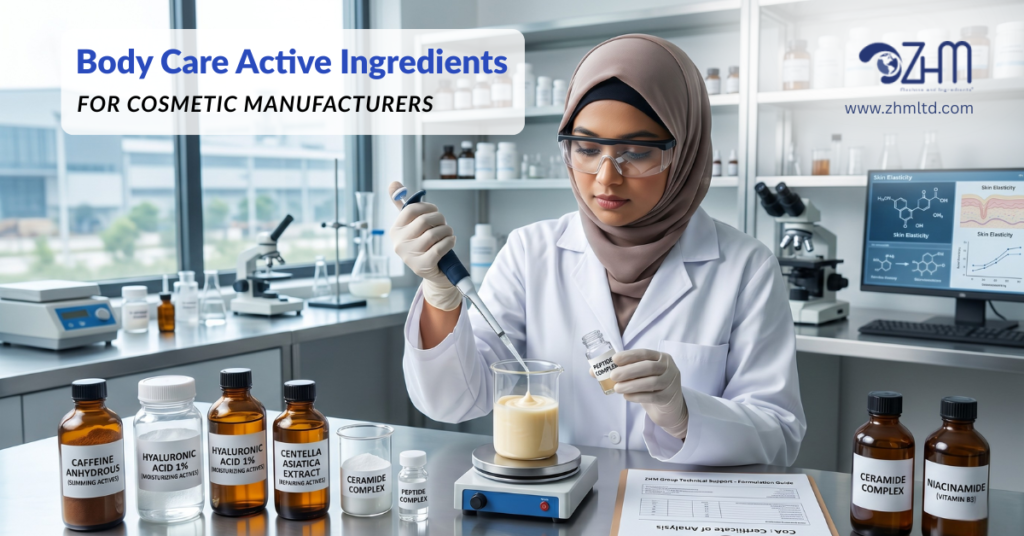
Bangladesh's body care market is one of the fastest-growing segments in the country's personal care and cosmetics industry. Consumers — particularly women in urban centres like Dhaka, Chittagong, and Sylhet — are increasingly demanding body care products that go beyond basic moisturisation to deliver visible, measurable results: firmer skin, reduced appearance of cellulite, slimmer contours, deeply nourished skin, and effective stretch mark repair.
This demand for results-driven body care has fundamentally changed what cosmetic manufacturers need from their ingredient suppliers. Standard emollients and moisturisers are no longer sufficient. Manufacturers formulating premium body lotions, firming creams, slimming gels, anti-cellulite formulations, and body repair products need access to high-performance body care active ingredients — clinically researched compounds that deliver the specific biological effects that make consumer claims credible and products effective.
ZHM Group, Bangladesh's trusted beauty and personal care ingredient supplier with over 20 years of sourcing experience, supplies body care active ingredients across all six functional sub-categories — firming, slimming, moisturising, nourishing, repairing, and anti-cellulite — to cosmetic manufacturers across Bangladesh. All actives are supplied with full INCI documentation, Certificate of Analysis (CoA), and technical support from our formulation team.
This comprehensive guide covers every body care active ingredient category, explains the underlying biology and mechanisms, provides specific ingredient examples, and gives practical formulation guidance for Bangladesh's cosmetic manufacturers.
Active ingredients in body care cosmetics are functional compounds that, when applied to the skin at effective concentrations, trigger specific biological or physiological responses — delivering measurable improvements in skin appearance, texture, hydration, or structural integrity. They are distinguished from functional ingredients (emollients, emulsifiers, preservatives) by their direct biological activity on skin cells, skin structure, or the underlying processes that determine skin appearance.
| Parameter | Active Ingredients | Functional Ingredients |
| Primary Role | Deliver the claimed skin benefit | Enable the formulation to work |
| Biological Effect | Direct effect on skin cells/tissue | Physical effect (moisturising film, emulsification) |
| Usage Level | Low (0.1–5% typically) | Higher (1–30% typically) |
| Examples | Peptides, Caffeine, Retinol | Emollients, Emulsifiers, Preservatives |
| Regulatory | Supports efficacy claims | Generally not claimed |
When a cosmetic manufacturer wants to make claims like "firms skin in 4 weeks", "reduces appearance of cellulite", or "visibly improves stretch marks", these claims must be supported by the presence of active ingredients with clinical evidence at effective concentrations. In Bangladesh's growing premium cosmetics market — and for manufacturers targeting export markets — having the right active ingredients at the right concentrations is both a marketing and regulatory necessity.
Under Bangladesh BSTI cosmetics regulations, body care products are regulated as cosmetics, not drugs. Efficacy claims must be supported by the presence of recognised active ingredients and ideally by consumer perception studies or clinical testing. ZHM Group can advise on active ingredient selection appropriate for the claims your product will make.
Skin firmness is determined by the integrity of the dermis — the deep skin layer where collagen and elastin fibres form the structural scaffold that keeps skin firm, elastic, and taut. As skin ages, or following rapid weight loss, pregnancy, or prolonged UV exposure, collagen and elastin production decreases and existing fibres degrade — leading to sagging, loss of firmness, and reduced skin elasticity.
Firming body care actives work through several mechanisms:
Skin-Tightening Peptides Peptides are short chains of amino acids that communicate with skin cells, triggering specific biological responses. Key firming peptides include:
DMAE (Dimethylaminoethanol) DMAE is a naturally occurring compound found in small quantities in the human brain. In topical application, DMAE is used at 3–5% for its immediate skin-tightening effect — it rapidly increases skin firmness and reduces sagging, particularly on the upper arms, abdomen, and thighs. It is one of the fastest-acting firming actives, with visible results within 20–30 minutes of application.
Botanical Firming Actives
Formulation Tip: Peptide firming actives are typically used at 0.1–3% concentration. DMAE is used at 3–5%. Combine peptide actives with Vitamin C (ascorbic acid derivatives) for synergistic collagen synthesis support.
Slimming body care actives work by stimulating the breakdown of stored fat (lipolysis) in adipocytes (fat cells), improving lymphatic drainage to reduce fluid retention, and visually contouring the skin. Cosmetic slimming products cannot replace exercise and diet — but effective actives can support and enhance slimming efforts, particularly when combined with massage.
Fat stored in adipocytes is released through lipolysis — triggered by the enzyme adenylate cyclase, which increases intracellular cAMP (cyclic adenosine monophosphate) levels, activating hormone-sensitive lipase to break down triglycerides into free fatty acids. Many slimming actives work by increasing cAMP levels or mimicking the signals that trigger this cascade.
Caffeine (Trimethylxanthine) Caffeine is the gold standard slimming active and the most widely used ingredient in anti-cellulite and slimming body products globally. Its mechanism of action is well documented:
Used at 2–5% in body slimming formulations. Caffeine also temporarily constricts blood vessels, improving the appearance of cellulite-dimpled skin.
L-Carnitine L-Carnitine is an amino acid derivative that plays a critical role in transporting long-chain fatty acids into the mitochondria for energy production. In topical slimming formulations, L-Carnitine supports the metabolic processing of fatty acids released during lipolysis, enhancing the overall fat-burning effect. Used at 1–3% in slimming gels and creams.
Ivy Leaf Extract (Hedera helix) Ivy leaf extract contains saponins (primarily Hederacoside C) with documented anti-adipogenic, lipolytic, and vascular-toning properties. It improves microcirculation, reduces fatty tissue accumulation, and has a firming effect on skin overlying adipose tissue. Used at 1–3% in slimming and anti-cellulite formulations.
Carnitine Actives Specialty carnitine derivatives (Lauroyl Carnitine, Acetyl Carnitine) designed for topical application with enhanced skin penetration. Support fat metabolism at the cellular level in adipose tissue.
Slimming Plant Extracts
Formulation Tip: Combine caffeine (3–5%) with L-Carnitine (1–2%) and Ivy extract (2–3%) for a comprehensive slimming active blend. Add a penetration enhancer (e.g., Lecithin, Glycerin) to support active delivery through the skin barrier.
While most body care actives focus on specific concerns (firming, slimming, cellulite), nourishing actives address the fundamental health and vitality of skin cells — providing the micronutrients, antioxidants, and bioactive lipids that skin cells need to function optimally, regenerate efficiently, and maintain their natural radiance.
Vitamin F (Linoleic Acid / Essential Fatty Acids) Vitamin F is the collective term for essential fatty acids — primarily Linoleic Acid (Omega-6) and Alpha-Linolenic Acid (Omega-3) — that the body cannot synthesise and must obtain from external sources. In topical application, Vitamin F:
Used at 1–5% in nourishing body oils, rich body creams, and dry skin formulations.
Niacinamide (Vitamin B3) Niacinamide is one of the most versatile cosmetic actives available. In body care nourishing formulations, it:
Used at 2–5% in nourishing body lotions and skin-brightening formulations.
Coenzyme Q10 (Ubiquinone) CoQ10 is a naturally occurring antioxidant found in every cell of the human body, where it plays a central role in cellular energy production (ATP synthesis in the mitochondria). Levels decline with age. In body care formulations, CoQ10:
Plant Stem Cell Actives Derived from stem cells of plants (apple, grape, rose, edelweiss), plant stem cell actives contain growth factors, epigenetic factors, and metabolites that signal skin's own stem cells to maintain their regenerative capacity. They protect skin stem cells from UV-induced damage and support epidermal renewal. Used at 0.1–1% in premium anti-ageing body formulations.
Vitamin E (Tocopherol / Tocotrienols) Natural antioxidant that protects cell membranes from lipid peroxidation. Also a skin-conditioning agent that improves moisture retention and soothes dry, irritated skin. ZHM Group supplies both standard Tocopherol and the more potent Tocotrienol form (Davoslife E3™).
Skin moisturisation is the most fundamental body care benefit — and the most commercially important. Effective moisturising actives go beyond simple occlusion (blocking water evaporation) to actively repair the skin's natural barrier, attract and bind water in the skin, and signal cellular processes that improve the skin's own moisture-retention capacity.
Hyaluronic Acid (Sodium Hyaluronate) Hyaluronic acid (HA) is the skin's natural moisturising molecule — a glycosaminoglycan polymer that can hold up to 1,000 times its weight in water. In topical body care formulations:
Used at 0.1–2% in body lotions and moisturising creams. Multi-weight HA blends provide both immediate and sustained moisturising benefits.
Ceramides Ceramides are lipid molecules that form the "mortar" between skin cells in the stratum corneum. They are essential for maintaining the skin's barrier function — preventing water evaporation and blocking entry of irritants, allergens, and pathogens. In body care actives:
Used at 0.01–1% (ceramides are active at very low concentrations). Ceramide NP, AP, and EOS are the most commonly used in cosmetics.
Urea (Carbamide) Urea is a naturally occurring component of the skin's Natural Moisturising Factor (NMF). As a cosmetic active:
Urea is particularly effective in body care formulations targeting dry, rough, or keratosis-prone skin areas.
Glycerol-Based Humectants Glycerol (Glycerin) and its derivatives are highly effective humectants that attract and retain atmospheric moisture in the skin. Glycerol also has film-forming properties that reduce transepidermal water loss. Used at 3–10% in body moisturisers.
Pro-Xylane A patented xylose-derived active from L'Oréal that stimulates hyaluronic acid synthesis in the skin's basal layer and supports the dermis-epidermis junction. Used in premium body care formulations at 0.3–1%.
Cellulite — the dimpled, uneven skin texture visible on the thighs, buttocks, and abdomen of approximately 85% of women — is caused by a combination of factors: fat deposits pushing against connective tissue fibres (septae), poor microcirculation, fluid retention, and skin laxity. Effective anti-cellulite formulations address multiple aspects simultaneously.
Caffeine (Primary Anti-Cellulite Active) As described in the Slimming Actives section, caffeine inhibits phosphodiesterase, elevating cAMP and triggering lipolysis in adipocytes. This directly reduces the volume of fat deposits responsible for cellulite appearance. Caffeine also improves microcirculation, reducing the oedema that contributes to the orange-peel texture. Standard anti-cellulite concentration: 3–5%.
Escin (Horse Chestnut Extract — Aesculus hippocastanum) Escin is the primary active saponin from Horse Chestnut seed extract. Its mechanism of action for anti-cellulite is particularly well documented:
Used at 0.5–2% in anti-cellulite body formulations. Often combined with caffeine for synergistic lipolytic + anti-oedematous effect.
Centella Asiatica Extract (Gota Kola) Standardised to Asiaticoside, Madecassoside, and Asiatic Acid. Centella Asiatica addresses the connective tissue component of cellulite:
Used at 0.5–3% in both anti-cellulite and skin firming formulations.
L-Carnitine Supports the metabolic processing of free fatty acids released during lipolysis, enhancing the total slimming effect of anti-cellulite formulations. Used at 1–3%.
Repairing body care actives address skin that has been structurally damaged — whether through rapid stretching (stretch marks, striae), UV damage (post-sun repair), or barrier disruption (sensitive skin, eczema-prone skin). They support the skin's own regenerative processes to rebuild and restore normal tissue structure and function.
Centella Asiatica (Asiaticoside / Madecassoside) The most evidence-backed active ingredient for stretch mark prevention and improvement. Clinical studies have demonstrated that Centella Asiatica extract:
Standard use: 0.5–3% in stretch mark prevention and repair formulations.
Ceramides Ceramide depletion is a key feature of barrier-damaged skin. Topical ceramide replacement:
Dexpanthenol (D-Panthenol / Pro-Vitamin B5) One of the most widely used and clinically supported skin repair actives in cosmetics:
Used at 0.5–5% in repair, post-sun, sensitive skin, and stretch mark formulations. One of the most versatile and well-tolerated repair actives.
Allantoin Allantoin is a naturally occurring compound (originally from comfrey root, now predominantly synthetic of natural origin) with outstanding skin repair properties:
Used at 0.1–2% in post-sun, barrier repair, and stretch mark formulations.
Post-Sun Repair Actives
Understanding which active ingredients belong in which product type helps manufacturers design effective, well-positioned products:
| Product Type | Primary Actives | Supporting Actives |
| Firming Body Cream | Peptides (Matrixyl), DMAE, Centella Asiatica | Hyaluronic Acid, Vitamin E, Niacinamide |
| Slimming Gel | Caffeine (3–5%), L-Carnitine, Ivy Extract | Escin, Guarana, Eucalyptus Oil |
| Anti-Cellulite Cream | Caffeine, Escin, Centella Asiatica, L-Carnitine | Retinol (vitamin A), Caffeine, Peptides |
| Stretch Mark Cream | Centella Asiatica, Dexpanthenol, Allantoin | Ceramides, Vitamin E, Rosehip Oil |
| Nourishing Body Oil | Vitamin F, CoQ10, Plant Stem Cells | Vitamin E, Omega-3 Actives |
| Moisturising Body Lotion | Hyaluronic Acid, Ceramides, Urea | Glycerol, Niacinamide, Panthenol |
| Body Wrap Treatment | Caffeine, Escin, Ivy Extract | Clay minerals, Essential Oils |
| Post-Sun Body Cream | Panthenol, Allantoin, Aloe Extract | Ceramides, Bisabolol, EGCG |
| Massage Oil (Slimming) | L-Carnitine, Caffeine | Essential Oils, Vitamin E |
Selecting the right body care actives requires considering five key factors:
Comprehensive Portfolio: ZHM Group supplies body care actives across all six functional categories — firming, slimming, moisturising, nourishing, anti-cellulite, and repairing — enabling manufacturers to source a complete body care active ingredient range from one trusted supplier.
Full INCI Documentation: Every active is supplied with full INCI name, CoA, SDS, and relevant technical data — essential for product label compliance, BSTI registration, and export market requirements.
Clinically Referenced Products: We supply body care actives from manufacturers who invest in clinical research, providing you with published efficacy data to support your product claims.
Flexible MOQ: Small R&D quantities for initial formulation and stability testing, scaling to full production batches with competitive bulk pricing.
Technical Formulation Support: Our team provides formulation guidance including active ingredient combinations, usage levels, compatibility checks, and delivery system recommendations — helping Bangladesh manufacturers develop better body care products.
Trusted for 20+ Years: ZHM Group has been supplying certified cosmetic and personal care ingredients to Bangladesh's manufacturing sector for over two decades.
The most clinically documented firming actives for body care are peptides — particularly Palmitoyl Pentapeptide-4 (Matrixyl®) which stimulates collagen I, III, and IV synthesis in dermal fibroblasts — and DMAE (Dimethylaminoethanol), which provides both immediate and cumulative skin-tightening effects. For botanical firming, Centella Asiatica extract (standardised to Asiaticoside and Madecassoside) has strong clinical evidence for improving skin elasticity and collagen synthesis. For best results, formulate peptides at ≥0.5% and DMAE at 3–5%, combined with collagen-synthesis co-factors like Vitamin C derivatives and Niacinamide. ZHM Group supplies all of these firming actives to cosmetic manufacturers in Bangladesh.
The most widely used and clinically supported slimming actives in anti-cellulite body creams are: Caffeine (3–5%) — the primary lipolytic active that inhibits phosphodiesterase, elevating cAMP and triggering fat breakdown in adipocytes; Escin from Horse Chestnut (0.5–2%) — tones capillary walls and reduces fluid retention that contributes to cellulite appearance; Centella Asiatica (1–3%) — improves microcirculation and stimulates connective tissue remodelling; and L-Carnitine (1–2%) — supports metabolic processing of released fatty acids. These four actives work through complementary mechanisms — lipolysis, vascular toning, connective tissue repair, and fat metabolism — providing a comprehensive anti-cellulite approach when combined in a single formulation.
Emollients are functional ingredients that create a physical film on the skin's surface to reduce water evaporation (occlusion) and improve skin softness and smoothness — examples include Isopropyl Myristate, Cetearyl Alcohol, and Mineral Oil. Moisturising actives, by contrast, are biologically active compounds that trigger specific moisturising mechanisms: Hyaluronic Acid attracts and holds water within skin layers; Ceramides repair the lipid barrier structure of the stratum corneum; Urea attracts atmospheric moisture into the skin; and Panthenol stimulates cell proliferation and barrier repair. In an effective moisturising body lotion, both emollients (for skin feel and occlusion) and moisturising actives (for biological moisturisation) are required — they work through different, complementary mechanisms.
Yes. ZHM Group sources all body care active ingredients from manufacturers who hold ISO 9001, GMP (Good Manufacturing Practice), and where applicable, COSMOS or Ecocert certifications. Every active ingredient is supplied with a Certificate of Analysis (CoA) confirming identity, purity, and compliance with specification. Safety Data Sheets (SDS) and INCI documentation are provided with every shipment — suitable for BSTI cosmetics product registration submissions in Bangladesh and for export market regulatory documentation. Contact our team for specific certification documentation requirements.
The most evidence-backed active ingredients for stretch mark prevention and improvement are: Centella Asiatica extract (0.5–3%) — the most clinically documented stretch mark active, with published evidence for improving skin elasticity and stimulating collagen synthesis to prevent and reduce striae; Dexpanthenol (Pro-Vitamin B5) (1–5%) — promotes skin regeneration and improves elasticity; Allantoin (0.1–2%) — stimulates healthy cell proliferation and soothes irritated skin in new striae; Ceramides (0.01–0.5%) — restore barrier function in damaged striated skin; and Vitamin E (Tocopherol) (0.5–1%) — antioxidant protection and moisturising support. The most effective stretch mark formulations combine at least three of these actives at effective concentrations, preferably in a rich emollient cream base that maximises penetration and adherence.
Yes — ZHM Group offers flexible minimum order quantities to support the full product development lifecycle. We supply small R&D quantities (from 100g–1kg for most actives) for initial formulation work, stability testing, and prototype development. Once your formulation is finalised and ready for scale-up, we supply production quantities at competitive bulk pricing. Our team is happy to provide samples for evaluation and initial testing prior to placing a formal order. Contact us at +88029634158 or [email protected] to discuss your specific requirements and receive a quotation.
Are you a cosmetic manufacturer or personal care product company in Bangladesh looking to source quality body care active ingredients for your formulations?
ZHM Group supplies certified, cosmetic-grade body care actives with full INCI documentation, Certificate of Analysis (CoA), and Safety Data Sheets (SDS) — across all six body care active categories: firming, slimming, moisturising, nourishing, anti-cellulite, and repairing.
We offer flexible MOQ for R&D batches and competitive pricing for bulk production orders. Our team provides technical support for formulation development — helping you create effective, claim-supported body care products that stand out in Bangladesh's competitive personal care market.
Request Bulk Quote & Samples
Download Technical Data Sheet
Related Articles: