ভিটামিন A সমৃদ্ধ স্মার্ট সুগার! — এখন বাজারে
The global nutraceutical market is projected to reach over $500 billion by 2028, with botanical extracts driving more than 30% of this massive growth? As consumers shift from synthetic supplements to natural, plant-based remedies, the demand for high-quality, scientifically backed herbal ingredients is at an all-time high.
The global nutraceutical and dietary supplement industry is undergoing a profound transformation. Consumers worldwide — and increasingly in Bangladesh — are moving away from purely synthetic supplements towards plant-based, naturally derived health products backed by centuries of traditional use and modern clinical evidence. At the heart of this natural health revolution are botanical extracts: concentrated, standardised plant-derived active ingredients that deliver measurable health benefits in capsules, tablets, powders, and functional foods.
Bangladesh's nutraceutical manufacturing sector is expanding rapidly, with supplement brands, herbal medicine manufacturers, Ayurvedic companies, and functional food producers all seeking reliable sources of certified, high-quality botanical extracts. Whether your formulation calls for an adaptogenic ashwagandha extract to reduce stress, a curcumin-standardised turmeric extract for joint health, or an EGCG-rich green tea extract for antioxidant support — sourcing the right botanical extract from a trusted supplier is the critical first step.
ZHM Group, Bangladesh's leading pharmaceutical and nutraceutical ingredient supplier with over 20 years of experience, supplies 80+ standardised botanical extracts to manufacturers across Bangladesh. Every extract in our portfolio is sourced from globally certified manufacturers, supplied with full technical documentation — Certificate of Analysis (CoA), Safety Data Sheet (SDS), standardisation certificate — and backed by our dedicated technical team for formulation support.
This comprehensive guide covers everything Bangladesh nutraceutical manufacturers need to know about botanical extracts: what they are, how they are standardized, the complete list of extracts available from ZHM Group, their health applications, quality standards, and how to source them for your manufacturing needs.
Botanical extracts are concentrated preparations derived from plants — roots, leaves, fruits, seeds, bark, or whole herbs — through various extraction and purification processes. Unlike crude dried herbs, botanical extracts are processed to concentrate specific biologically active compounds (phytochemicals) and to remove inert plant material, resulting in a standardised, potent ingredient suitable for pharmaceutical and nutraceutical manufacturing.
The most important concept in botanical extract quality is standardisation: the process of adjusting an extract to contain a defined, consistent percentage of its key active compound(s). Standardisation ensures that every batch delivers the same level of biological activity — critical for supplement manufacturers who need to make accurate health claims and dosage recommendations.
Common standardisation markers include:
Where a specific active marker is not used, botanical extracts are described by their concentration ratio — the amount of raw plant material required to produce 1 unit of extract:
A higher ratio does not automatically mean higher potency — potency depends on the content of bioactive compounds in the original plant material and the efficiency of extraction. Standardised extracts (by active marker %) provide more reliable potency information than ratio extracts alone.
All botanical extracts must be evaluated and documented for the following key quality parameters before use in supplement manufacturing:
| Quality Parameter | Specification Requirement |
| Assay (Active compound %) | Per standardisation specification |
| Heavy Metals (Lead, Arsenic, Cadmium, Mercury) | ICH Q3D / USP <232> limits |
| Pesticide Residues | EU MRL / USP <561> limits |
| Microbial Count (TAMC, TYMC) | USP <2021> / EP 5.1.4 limits |
| Solvent Residues | ICH Q3C Class 1, 2, 3 limits |
| Loss on Drying | Per monograph |
| Particle Size | Per application specification |
| Authenticity (DNA barcoding / HPTLC) | Species verification |
ZHM Group supplies 80+ botanical extracts for nutraceutical and pharmaceutical manufacturers in Bangladesh. Below is our comprehensive A–Z guide — every extract with its primary health benefit, key active compounds, and main applications.
Acerola (Malpighia emarginata) Natural Vitamin C source — one of the richest plant sources of ascorbic acid. Used in natural vitamin C supplements, immune support, and antioxidant formulas. Standardised to 17–25% Vitamin C.
Alfalfa (Medicago sativa) Rich in chlorophyll, vitamins, and minerals. Used in general wellness supplements, detoxification formulas, and as a natural alkalising ingredient.
Aloe Ferox South African species with higher anthraquinone content than Aloe vera. Used in digestive support, laxative formulations, and detox products.
Aloe Vera (Aloe barbadensis) One of the most widely used botanicals globally. Contains acemannan polysaccharides with immunomodulatory and gut-healing properties. Applications: digestive health, IBS support, skin health supplements, anti-inflammatory formulas, immune support.
Amla / Indian Gooseberry (Emblica officinalis) Exceptionally rich in natural Vitamin C (20x more than oranges), polyphenols, and tannins. Potent antioxidant, liver tonic, and Ayurvedic rejuvenating herb. Standardised to Tannins and Vitamin C content.
Andrographis (Andrographis paniculata) Powerful immune-stimulating and anti-viral herb widely used in Ayurvedic and traditional Bangladeshi medicine. Active compound: Andrographolides. Applications: cold & flu prevention, fever reduction, liver support.
Apple Extract (Malus domestica) Rich in polyphenols, quercetin, and phloridzin. Antioxidant, cardiovascular support, and gut health applications. Used in functional food and supplement formulations.
Aronia (Aronia melanocarpa) / Black Chokeberry One of the highest antioxidant content berries. Rich in Anthocyanins, Proanthocyanidins, and Chlorogenic Acid. Cardiovascular, antioxidant, and anti-inflammatory applications.
Artichoke (Cynara scolymus) Standardised to Cynarin content. Hepatoprotective (liver-protective), bile stimulant, and cholesterol-lowering applications. Used in digestive health and liver support supplements.
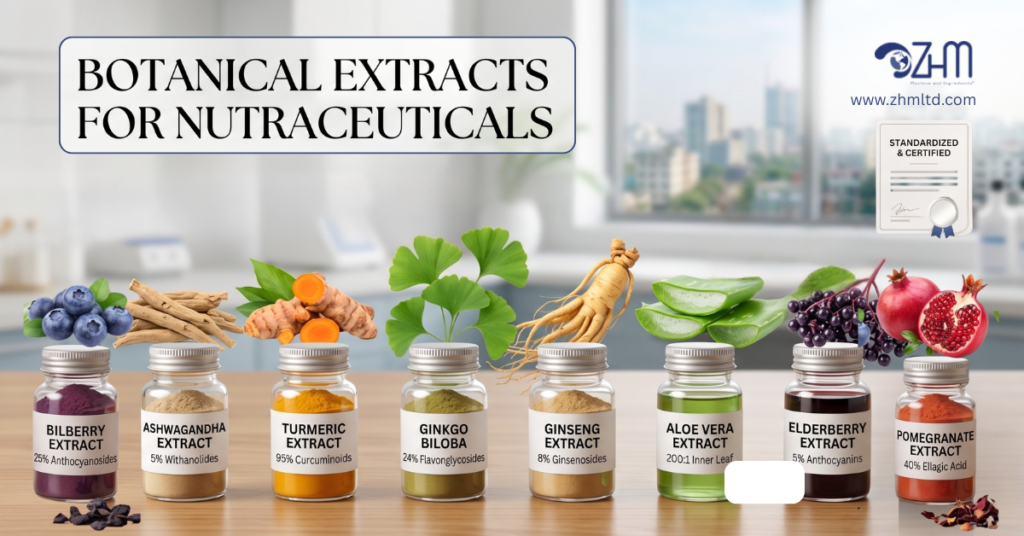
Ashwagandha (Withania somnifera) King of Adaptogens. Standardised to 2.5–5% Withanolides. Clinical evidence for: stress and anxiety reduction, testosterone and male fertility support, athletic performance improvement, cognitive function, thyroid regulation, sleep quality. One of the fastest-growing nutraceutical ingredients globally.
Bacopa Monnieri (Brahmi) Standardised to Bacosides A & B (20–55%). Cognitive enhancer with strong clinical evidence for memory improvement, learning enhancement, and anxiety reduction. Popular in children's brain health supplements and cognitive performance products.
Baobab (Adansonia digitata) African superfruit with exceptionally high Vitamin C (6x more than orange), prebiotic fibre, and polyphenol content. Antioxidant, digestive health, and immune support.
Bearberry / Uva Ursi (Arctostaphylos uva-ursi) Standardised to Arbutin (20%). Antimicrobial and urinary tract support applications. Used in urinary health supplements.
Bilberry (Vaccinium myrtillus) Standardised to 25% Anthocyanosides. Potent antioxidant with clinical evidence for eye health — improving night vision, reducing eye fatigue, and protecting against age-related macular degeneration. Also cardiovascular and anti-inflammatory applications.
Birch / Common White Birch (Betula pendula) Leaves and bark contain Betulin and Betulinic acid with anti-inflammatory and antioxidant properties. Detoxification and urinary tract support applications.
Blackcurrant (Ribes nigrum) Very high Anthocyanin content. Vision support, immune modulation, anti-inflammatory, and antioxidant applications. Popular in functional beverage fortification.
Bladderwrack / Kelp (Fucus vesiculosus) Natural iodine source from seaweed. Thyroid support, metabolism, and weight management applications. Used in thyroid support formulas.
Buchu Betulina (Buchu leaf) South African herb with antibacterial and diuretic properties. Urinary tract health and kidney support applications.
Burdock Root (Arctium lappa) Blood purifying and detoxifying herb. Contains Inulin, Mucilage, and Polyacetylenes. Applications: skin health (acne support), liver detox, digestive health.
Butcher's Broom (Ruscus aculeatus) Standardised to Ruscogenins. Vascular tonic — improves venous tone and reduces leg heaviness. Used in varicose veins support, haemorrhoid formulas, and lower limb circulation supplements.
Caraway (Carum carvi) Contains D-Carvone and Limonene essential oils. Carminative (relieves gas), digestive antispasmodic, and mild antimicrobial. Digestive support applications.
Chamomile (Matricaria chamomilla) Standardised to Apigenin. One of the most recognised calming herbs globally. Applications: sleep support, anxiety reduction, digestive relaxation, anti-inflammatory, anti-spasmodic. Paediatric formulations and general wellness supplements.
Chilli / Capsicum (Capsicum annuum) Standardised to Capsaicin (0.1–1%). Thermogenic (fat burning), topical pain relief, cardiovascular support. Used in weight management, topical analgesic products.
Cinnamon (Cinnamomum verum / cassia) Standardised to Polyphenols / Cinnamic Acid. Blood glucose management, antimicrobial, and digestive support. Popular in diabetes support supplements in Bangladesh.
Cocoa Bean Extract (Theobroma cacao) Rich in Theobromine and Flavanols (Epicatechin, Catechin). Cardiovascular, cognitive support, and mood-enhancing applications. Used in functional chocolate and premium supplement formulations.
Coriander (Coriandrum sativum) Contains Linalool and Geranyl Acetate. Digestive support, blood sugar management, and antimicrobial applications.
Cumin (Cuminum cyminum) Rich in Cuminaldehyde. Digestive support, carminative, and antimicrobial properties. Traditional Bangladeshi and South Asian medicine staple.
Dandelion (Taraxacum officinale) Contains Inulin, Sesquiterpene lactones, and Flavonoids. Diuretic, liver support, digestive stimulant, and prebiotic applications. Used in detox and liver health formulas.
Devil's Claw (Harpagophytum procumbens) Standardised to Harpagoside (1.2–2%). African herb with strong anti-inflammatory properties. Applications: joint health, osteoarthritis support, back pain management.
Echinacea (Echinacea purpurea / angustifolia) Standardised to Cichoric Acid (4%) or Alkylamides. Best-selling immune support herb globally. Strong clinical evidence for reducing cold and flu incidence, duration, and severity. Applications: immune support, respiratory health, anti-viral, anti-bacterial.
Echinacea Purpurea Purple coneflower species with distinct phytochemical profile from E. angustifolia. Also standardised to polysaccharides and Cichoric Acid. Combined extracts provide broadest immune support.
Elderberry Black Flower (Sambucus nigra — flowers) Flowers contain flavonoids and mucilaginous compounds. Applications: respiratory health, mild diaphoretic (fever management), anti-catarrhal.
Elderberry Black Fruit (Sambucus nigra — berries) Standardised to Anthocyanins. Strong antiviral activity against influenza viruses (H1N1 and H3N2). Clinical trials demonstrate reduction in cold and flu duration by 50%. One of the fastest-growing botanical supplements globally.
Fennel (Foeniculum vulgare) Contains Trans-Anethole as primary active. Carminative, anti-spasmodic, and galactagogue (promotes breast milk production). Digestive health and infant colic formulas.
Fenugreek (Trigonella foenum-graecum) Standardised to Saponins (50%). Blood glucose management, testosterone support, milk production enhancement, and digestive health. Popular in men's health and diabetes support supplements.
Ficus Carica Bud (Common Fig) Gemmotherapy bud extract. Digestive regulatory, mild anti-spasmodic, and metabolic support applications.
Garlic (Allium sativum) Standardised to Allicin potential (0.6–1.2%) or Alliin. Cardiovascular support (reduces blood pressure and LDL cholesterol), antimicrobial, immune support. One of the most clinically documented botanicals.
Ginger (Zingiber officinale) Standardised to 5% Gingerols and Shogaols. Anti-nausea (pregnancy, chemotherapy, motion sickness), anti-inflammatory, digestive support, anti-arthritic. Widely used in Bangladesh traditional medicine.
Ginkgo Biloba Standardised to 24% Ginkgo Flavonglycosides + 6% Terpene Lactones (EGb 761 standard). Cognitive enhancer — improves blood circulation to the brain, memory, concentration, and is used in Alzheimer's support and age-related cognitive decline. Also peripheral circulation and tinnitus applications.
Ginseng Panax (Panax ginseng) Standardised to 4–8% Ginsenosides. The original adaptogen. Energy enhancement, immune modulation, cognitive support, and anti-fatigue. One of the top-selling botanical extracts worldwide.
Gota Kola / Centella Asiatica Standardised to Triterpenes / Asiaticoside. Wound healing, connective tissue support (collagen synthesis), cognitive enhancement, and anxiety reduction. Used in both skin health products and cognitive supplements.
Grapefruit Seed Extract Contains Hesperidin and Naringenin flavonoids. Antimicrobial, antioxidant, and cardiovascular support. Used as natural preservation support in supplements.
Green Coffee Bean Extract Standardised to 45–50% Chlorogenic Acid. Weight management (inhibits glucose absorption), antioxidant, blood pressure support. Popular in weight loss supplement formulations.
Green Rooibos (Aspalathus linearis — unfermented) Unfermented rooibos, higher in Aspalathin antioxidant than regular rooibos. Antioxidant, anti-diabetic, and cardiovascular support applications.
Green Tea Extract (Camellia sinensis) Standardised to 50–98% EGCG (Epigallocatechin Gallate). Potent antioxidant — EGCG is one of the most powerful natural antioxidants known. Applications: weight management, fat oxidation, cancer prevention support, cardiovascular, cognitive, and anti-inflammatory.
Guarana (Paullinia cupana) Standardised to 10–22% Caffeine plus Theobromine and Theophylline. Natural caffeine source with slower release than coffee caffeine. Applications: energy, mental focus, endurance, weight management. Popular in energy supplement formulations.
Guggul (Commiphora mukul) Standardised to Guggulsterones (2.5%). Thyroid stimulant, cholesterol management, and anti-inflammatory applications. Used in weight management and metabolic support supplements.
Gymnema Sylvestre Standardised to 25% Gymnemic Acids. Reduces sugar absorption in the gut by temporarily blocking sweet taste receptors. Blood sugar management, insulin sensitivity support, and sugar craving reduction. Highly relevant for Bangladesh's growing diabetic population.
Holy Basil / Tulsi (Ocimum tenuiflorum) Standardised to Ursolic Acid and Eugenol. Adaptogen, stress reduction, cortisol regulation, anti-inflammatory, and immune support. Sacred herb in Ayurvedic medicine with growing global supplement market.
Honeybush (Cyclopia intermedia) South African herbal tea plant rich in Mangiferin. Antioxidant, hormonal balance (phytoestrogens), and respiratory health applications.
Hops (Humulus lupulus) Standardised to Alpha acids / Methylbutenol. Sleep-promoting (sedative), anxiety reduction, and anti-inflammatory. Used in sleep support formulas, often combined with Valerian.
Horsetail (Equisetum arvense) Rich in Silica and Flavonoids. Bone and connective tissue support, diuretic, and hair/nail strength applications.
Iceland Moss (Cetraria islandica) Contains Lichenin and Isolichenin polysaccharides. Respiratory health (soothes irritated mucous membranes), antimicrobial, and gut health applications.
Kola Nut (Cola nitida) Standardised to Caffeine (2–3%) and Theobromine. Natural stimulant, mental focus, and energy applications. Used in natural energy formulations.
Lemon Balm (Melissa officinalis) Standardised to Rosmarinic Acid. Calming herb with evidence for: anxiety reduction, sleep improvement, cognitive performance, and antiviral activity (Herpes simplex). Often combined with Valerian and Passionflower.
Mallow (Malva sylvestris) Contains mucilaginous polysaccharides. Soothing for respiratory mucous membranes and digestive tract. Anti-inflammatory applications.
Marigold / Pot Marigold / Calendula (Calendula officinalis) Standardised to Flavonoids / Oleanolic Acid. Anti-inflammatory, wound healing, and antimicrobial. Used in skin health supplements and topical herbal medicines.
Marshmallow Root (Althaea officinalis) High mucilage content soothes inflamed mucous membranes. Respiratory health (coughs, sore throat), digestive health (gastritis, IBS), and urinary tract support.
Maté / Yerba Maté (Ilex paraguariensis) Standardised to Caffeine, Theobromine, and Chlorogenic Acids. Natural stimulant with thermogenic and antioxidant properties. Energy, weight management, and mental focus applications.
Nettle Leaf (Urtica dioica) Rich in Iron, Chlorophyll, and Lectins. Anti-inflammatory (particularly for allergic rhinitis), prostate health support, and nutritional supplementation. Evidence for benign prostatic hyperplasia (BPH) support.
Oat Extract (Avena sativa) Contains Beta-Glucan and Avenanthramides. Cardiovascular (cholesterol reduction), anti-inflammatory, and nervous system calming (Avena sativa as nerve tonic). EU approved health claim for Beta-Glucan and cholesterol reduction.
Olive Tree Leaf (Olea europaea) Standardised to Oleuropein (6–40%). Cardiovascular support, antihypertensive, antioxidant, antimicrobial, and anti-diabetic properties. Increasingly popular in cardiovascular health formulations.
Olive Tree Fruit Contains Hydroxytyrosol and Squalene. High-potency antioxidant, Mediterranean diet health benefits, cardiovascular support.
Passionflower (Passiflora incarnata) Standardised to Flavonoids / Vitexin (2–4%). Anxiolytic and sleep-promoting effects with clinical evidence. Used in anxiety, insomnia, and stress management formulas — often combined with Valerian and Lemon Balm.
Pelargonium Root (Pelargonium sidoides — EPs 7630) Patented extract for respiratory health — clinical trials demonstrate efficacy for acute bronchitis, sinusitis, and the common cold. The most clinically documented respiratory botanical.
Peppermint (Mentha piperita) Standardised to Menthol. Digestive antispasmodic (IBS), carminative, cognitive alertness, and topical cooling. Enteric-coated peppermint oil capsules are a well-documented IBS treatment.
Plantago / Psyllium (Plantago ovata) Contains Mucilaginous polysaccharides / Psyllium husk. FDA-approved soluble fibre health claim for cholesterol reduction. Laxative, IBS support, and prebiotic applications.
Pomegranate (Punica granatum) Standardised to Ellagic Acid and Punicalagins (40%). Potent antioxidant, cardiovascular protection, anti-inflammatory, and potential prostate health benefits.
Propolis (Bee Propolis) Complex natural resin collected by bees. Contains Flavonoids, Caffeic Acid Phenethyl Ester (CAPE), and terpenoids. Antimicrobial, antiviral, anti-inflammatory, and immune support. Used in throat lozenges, oral health products, and immune support formulas.
Pumpkin Seed (Cucurbita pepo) Standardised to fatty acids and phytosterols. Prostate health (BPH support), bladder health, and sleep support (contains Tryptophan). Popular in men's health formulations.
Rooibos (Aspalathus linearis) South African red bush tea. Rich in Aspalathin and Quercetin. Antioxidant, anti-diabetic support, cardiovascular, and anti-allergy applications. Caffeine-free.
Rosehip (Rosa canina) Standardised to Vitamin C (5–25%) and Galactolipids (GOPO®). Vitamin C source, joint health (osteoarthritis evidence), anti-inflammatory, and immune support.
Rosemary (Rosmarinus officinalis) Standardised to Rosmarinic Acid and Carnosic Acid. Antioxidant (natural food preservation), cognitive support, circulatory stimulant, and hepatoprotective. Used in anti-ageing and brain health supplements.
Sage (Salvia officinalis) Standardised to Rosmarinic Acid. Menopausal symptom relief (hot flushes), cognitive enhancement, antimicrobial, and anti-inflammatory. Clinical evidence for menopausal support.
Schisandra / Shisandra (Schisandra chinensis) Standardised to Schisandrins (2–9%). Adaptogen with hepatoprotective, adaptogenic, and cognitive-enhancing properties. Used in liver support and stress management formulas.
Siberian Ginseng / Eleuthero (Eleutherococcus senticosus) Standardised to Eleutherosides (0.8–1%). Non-Panax adaptogen with evidence for physical performance enhancement, fatigue reduction, and immune modulation. Cost-effective adaptogen alternative to Panax Ginseng.
Tamarind (Tamarindus indica) Rich in tartaric acid, polyphenols, and B vitamins. Digestive health, antioxidant, and anti-inflammatory applications. Popular in South Asian herbal formulations.
Thyme / Common Thyme (Thymus vulgaris) Standardised to Thymol (0.5–2.5%). Expectorant (mucus clearance), antimicrobial, and anti-bronchitis. Used in respiratory health formulations. Strong clinical evidence for bronchitis treatment.
Turmeric / Curcumin (Curcuma longa) Standardised to 95% Curcuminoids. One of the most extensively researched botanicals globally — 10,000+ clinical studies. Applications: joint health (osteoarthritis, rheumatoid arthritis), anti-inflammatory, antioxidant, digestive health, cognitive support, cardiovascular protection. Available in standard and bioavailability-enhanced forms (with Piperine, Phospholipid complex, or nanoformulation).
Valerian Root (Valeriana officinalis) Standardised to Valerenic Acid (0.3–0.8%). Clinical evidence for sleep onset improvement and anxiety reduction. One of the best-selling botanical supplements for sleep. Often combined with Hops, Passionflower, and Lemon Balm for synergistic effect.
Vine Leaf Extract (Vitis vinifera — leaves) Standardised to Flavonoids and Anthocyanins. Venous insufficiency treatment — reduces leg swelling, varicose vein symptoms, and improves microcirculation.
Vine Fruit Extract (Vitis vinifera — fruit/grape seed) Standardised to OPC (Oligomeric Proanthocyanidins) 95%. Potent antioxidant (20x stronger than Vitamin C), cardiovascular support, skin health (collagen protection), and anti-inflammatory.
White Kidney Bean (Phaseolus vulgaris) Standardised to Phaseolamin (Phase 2 enzyme inhibitor). Reduces starch absorption in the digestive tract. Weight management and blood sugar management applications.
Bangladesh's supplement manufacturers can leverage our botanical extract portfolio across all major health categories:
Key Extracts: Echinacea, Elderberry (fruit), Andrographis, Propolis, Garlic, Thyme, Pelargonium, Eleuthero, Holy Basil, Acerola
The immune support category is the largest supplement market segment globally and in Bangladesh. Our Echinacea (standardised to 4% Cichoric Acid) and Elderberry (standardised to 5% Anthocyanins) extracts are consistently in demand for cold and flu prevention and immune resilience formulations.
Key Extracts: Ginkgo Biloba, Bacopa Monnieri, Ashwagandha, Green Tea (EGCG), Rosemary, Lemon Balm, Sage, Gota Kola, Schisandra
Cognitive health supplements — for memory, focus, and stress-related cognitive decline — are growing rapidly as Bangladesh's urban professional and student populations prioritise mental performance.
Key Extracts: Aloe Vera, Artichoke, Fennel, Ginger, Dandelion, Marshmallow Root, Iceland Moss, Peppermint, Burdock Root, Plantago
Key Extracts: Ashwagandha, Ginseng (Panax), Siberian Ginseng (Eleuthero), Guarana, Holy Basil, Schisandra, Rhodiola (Maté), Kola Nut, Bacopa
Key Extracts: Gymnema Sylvestre, Fenugreek, Cinnamon, Bitter Melon, Green Coffee Bean, Berberine-containing plants, White Kidney Bean
This is a critically important category for Bangladesh, where diabetes prevalence is among the highest in South Asia.
Key Extracts: Olive Leaf, Bilberry, Grape Seed/Vine Fruit, Ginkgo, Garlic, Pomegranate, Aronia, Rooibos, Hawthorn-related
Key Extracts: Valerian, Passionflower, Lemon Balm, Chamomile, Hops, Ashwagandha, Holy Basil, Lavender
Key Extracts: Turmeric (Curcumin), Devil's Claw, Rosehip, Boswellia, Ginger, Willow Bark, Nettle
Key Extracts: Artichoke, Dandelion, Schisandra, Milk Thistle (Silymarin), Burdock, Amla, Rosemary
Key Extracts: Ashwagandha, Fenugreek, Ginseng, Pumpkin Seed, Tribulus, Guarana, Shilajit
When dealing with plant extracts pharma Bangladesh, safety and efficacy are non-negotiable. Poor quality extracts can contain heavy metals or fail to deliver the promised health benefits. At ZHM Group, we adhere strictly to global pharmaceutical standards.
All botanical extracts supplied by ZHM Group meet internationally recognised quality standards:
The EP and BP contain monographs for commonly used botanical extracts defining identity tests, purity requirements, and assay methods. EP/BP compliance is required for licensed herbal medicinal products and is increasingly demanded by export-oriented manufacturers.
USP botanical monographs define identity, strength, quality, and purity. FCC (Food Chemical Codex) standards apply to botanical extracts used in food and dietary supplement applications.
All our botanical extracts are tested for Lead (Pb), Arsenic (As), Cadmium (Cd), and Mercury (Hg) against ICH Q3D oral dietary supplement limits — significantly stricter than food-grade limits.
Our extracts are tested against EU Maximum Residue Levels (MRLs) for pesticide residues — protecting your formulation and your consumers from agricultural chemical contamination.
Each batch is tested for Total Aerobic Microbial Count (TAMC), Total Yeast and Mould Count (TYMC), and absence of specified pathogens including Salmonella spp., E. coli, Staphylococcus aureus, and Pseudomonas aeruginosa.
Every standardised extract is supplied with a standardisation certificate confirming the percentage of active marker compounds — for example, Ashwagandha standardised to 5% Withanolides, or Turmeric standardised to 95% Curcuminoids.
Selected botanical extracts in our portfolio are available with organic certification (USDA Organic / EU Organic) for manufacturers producing certified organic supplements. Contact ZHM Group to confirm organic availability for specific extracts.
80+ Extract Portfolio: Bangladesh's most comprehensive botanical extract range under one roof — eliminating the need to manage multiple suppliers for different botanicals.
Standardisation Guaranteed: Every extract comes with a standardisation certificate confirming active compound content — not just a ratio claim. You can make accurate dosage and health claim decisions.
Full Documentation Package: CoA, SDS, standardisation certificate, heavy metals report, pesticide residue report, and microbial test results — everything needed for DGDA product registration.
Certified Sourcing: All extracts sourced from globally certified manufacturers holding ISO 9001, GMP, and where applicable organic certifications.
Formulation Support: Our technical team can advise on extract selection, dosage, compatibility with excipients, and stability considerations — helping you develop better products faster.
Flexible MOQ: Small R&D quantities for initial formulation and stability testing, scaling to full production batch quantities with competitive bulk pricing.
Bangladesh Regulatory Knowledge: We understand DGDA's requirements for herbal and nutraceutical product registration and can support your documentation process.
Standardised botanical extracts are plant-derived ingredients that have been processed and adjusted to contain a defined, consistent percentage of specific biologically active compounds (phytochemicals). For example, Ashwagandha extract standardised to 5% Withanolides guarantees that every batch delivers the same level of key active compounds, ensuring consistent potency and enabling accurate dosage recommendations. Standardisation is the most important quality parameter distinguishing pharmaceutical and nutraceutical-grade botanical extracts from crude herbs or uncontrolled non-standardised extracts.
Ashwagandha (Withania somnifera) extract is one of the most versatile and clinically documented adaptogenic herbs. In nutraceutical formulations, it is used for: stress and anxiety reduction (reduces cortisol levels), testosterone and male fertility support, athletic performance and muscle recovery, cognitive function and memory, thyroid hormone regulation support, immune modulation, and improving sleep quality. The standard dose in clinical studies ranges from 300–600mg of extract standardised to 5% Withanolides per day. ZHM Group supplies Ashwagandha extract in Bangladesh standardised to 2.5–5% Withanolides with full CoA documentation.
Yes. Selected botanical extracts in ZHM Group's portfolio are available with USDA Organic or EU Organic certification for manufacturers producing certified organic dietary supplements. Organic-certified extracts are processed without synthetic pesticides, herbicides, or chemical solvents, and the certification chain is documented from farm to extract. As demand for organic supplements grows in Bangladesh and in export markets, we can supply organic-certified options for key extracts including Ashwagandha, Turmeric, Ginger, Amla, and others. Contact our team to confirm availability of organic certification for specific extracts required by your formulation.
The extraction ratio describes the concentration of a botanical extract relative to the raw herb used. A 10:1 extract means 10 kg of raw herb was used to produce 1 kg of extract — a 10x concentration. A 20:1 extract means 20 kg of raw herb produced 1 kg of extract — a 20x concentration. In theory, a 20:1 extract is more concentrated, but this depends entirely on the potency of the starting raw material. A 20:1 extract from low-quality raw material may be less potent than a 10:1 extract from high-quality material. This is why standardised extracts (defined by active compound % rather than ratio) provide more reliable potency information. Always request CoA with active compound assay, not just ratio specifications.
Pharmaceutical and nutraceutical-grade botanical extracts undergo rigorous multi-step quality testing: (1) Botanical identity — confirmed by HPTLC (High Performance Thin Layer Chromatography), HPLC, or DNA barcoding to verify correct species and rule out adulteration; (2) Active compound assay — HPLC analysis quantifies the standardised active marker percentage; (3) Heavy metals testing — ICP-MS analysis for Lead, Arsenic, Cadmium, Mercury against ICH Q3D limits; (4) Pesticide residue screening — multi-residue screening against EU MRLs; (5) Microbial testing — TAMC, TYMC, and pathogen testing; (6) Solvent residues — confirmation that extraction solvents meet ICH Q3C safety limits. ZHM Group provides all test reports with every batch.
Based on market demand and formulation enquiries, the most popular botanical extracts in Bangladesh's nutraceutical sector in 2026 are: Ashwagandha (adaptogen, stress, testosterone), Turmeric/Curcumin (anti-inflammatory, joint health), Ginger (digestive health, anti-nausea — widely accepted in Bangladesh traditional medicine), Gymnema Sylvestre and Fenugreek (blood sugar management — critical given Bangladesh's high diabetes prevalence), Echinacea and Elderberry (immune support), Aloe Vera (digestive health), Ginkgo Biloba (cognitive health), Morinda / Amla (Vitamin C, antioxidant), and Bacopa Monnieri (cognitive function, children's brain health). Contact ZHM Group for current pricing and availability on these high-demand extracts.
Are you a nutraceutical, herbal medicine, Ayurvedic, or supplement manufacturer in Bangladesh looking to source certified, standardised botanical extracts for your product formulations?
ZHM Group supplies 80+ botanical extracts with full standardisation certificates, heavy metals testing, pesticide residue reports, and Certificate of Analysis — backed by over 20 years of ingredient sourcing experience in Bangladesh.
We supply:
Contact ZHM Group Today → Request Botanical Extract Data Sheets
View All Pharma & Nutraceutical Ingredients
Related Articles: